

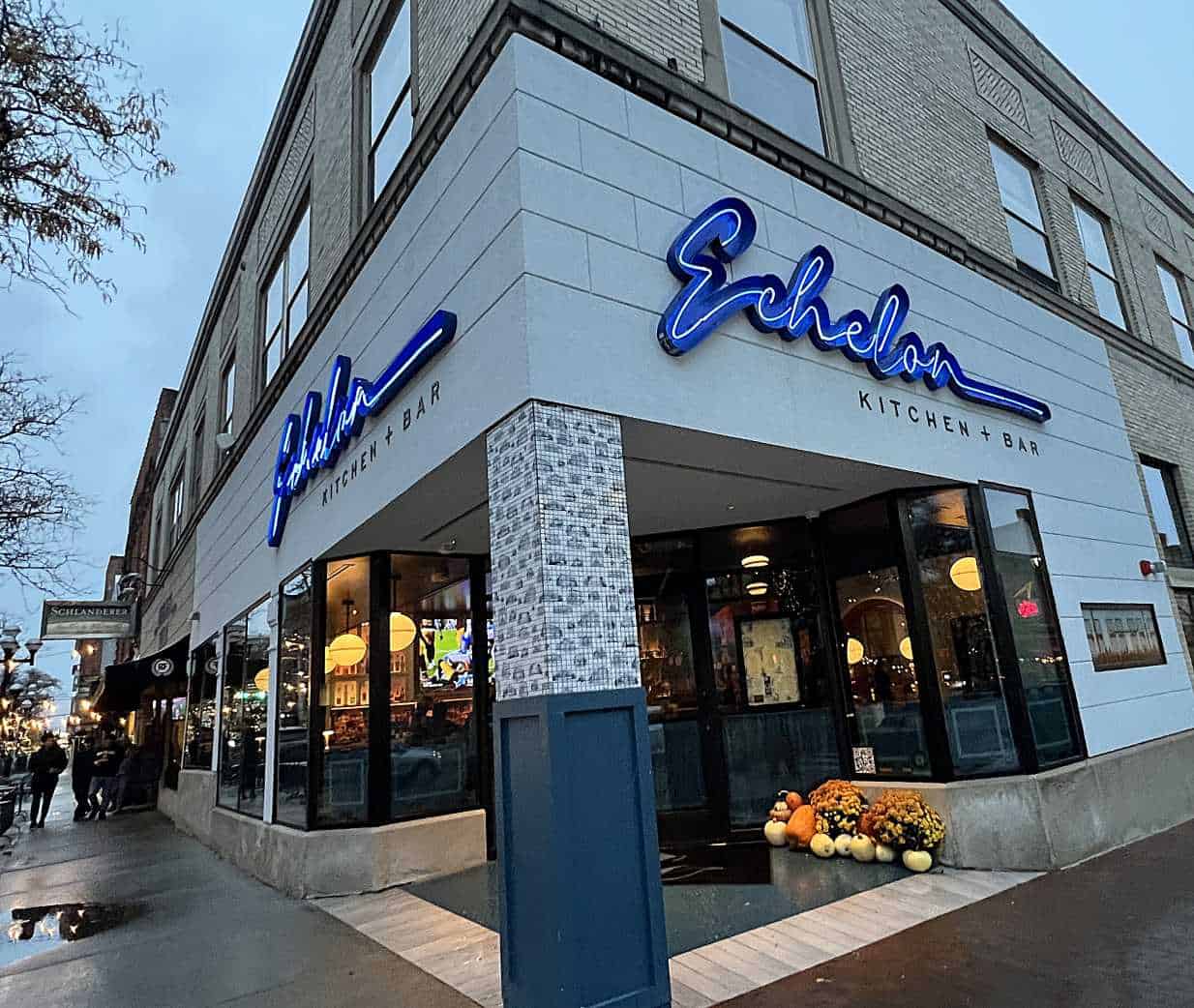
About Echelon Kitchen & Bar
For diners who already love exploring menus, the tasting format at Echelon is a chance to see the restaurant at its most creative. The team curates a progression that might move from bright, raw bites to deeply caramelized vegetables and generous wood-fired mains, culminating with an unusual dessert. It is not the most budget-friendly or flexible way to dine at Echelon. You’ll want to set aside an evening rather than a quick pre-show bite, but if you are curious about what this kitchen can really do, the tasting menu is where the technique, pacing, and hospitality all come together. The tasting becomes the entire evening and a complete dining experience.
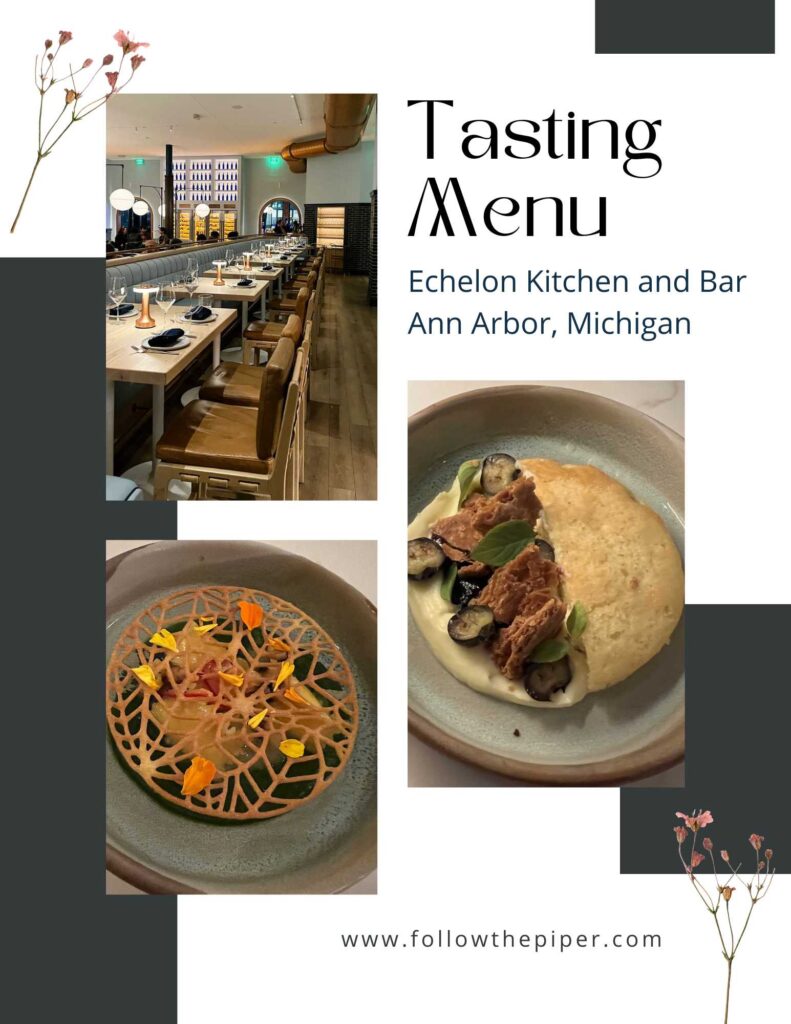
Echelon Kitchen & Bar is ideal for date nights, foodies seeking an experience, and those wanting something upscale yet approachable. Located on Main Street, the restaurant is in the center of things. You’ll find nightclubs within a leisurely after-dinner walk. The design vibe is modern and feels special with its upscale lighting and banquettes, yet no stuffy white tablecloths.
Looking for a hotel in Ann Arbor to explore more?
Atmosphere and Service
The dining room at Echelon strikes a rare balance between refined and relaxed. The lighting is soft enough to feel intimate, ideal for a date night, but bright enough that every course still gets its moment.
The bar and dining room are thoughtfully distinct, keeping the energy lively without ever becoming loud. From many tables, you can catch a glimpse of the open kitchen and the wood-fired grill. The steady glow is a gentle reminder that fire isn’t just a cooking method here. It’s the heart of the experience.
Service strikes the same balance of relaxation and precision. Courses are paced so you never feel rushed, but also don’t wonder where the next plate is coming from. Staff are knowledgeable about the ingredients and happy to suggest thoughtful wine or cocktail pairings, often explaining why a particular glass complements the smoke or acidity of a dish.
When you choose the tasting menu, they guide you through the meal’s progression. They also let you know where substitutions are possible, checking for dislikes and allergies rather than assuming everything is fair game. If you mention vegetarian, gluten-free, or similar dietary needs, the team makes a point of adapting courses without making you feel like an afterthought, keeping the spirit of the menu intact while swapping in components that suit your needs.
Tasting Menu Overview at Echelon Kitchen & Bar, Ann Arbor
The seven-course tasting menu at $125 changes according to what’s fresh and seasonal. They offer omnivore, pescatarian, vegetarian, and vegan preparations. While you can choose the type of meal you prefer, they suggest you trust them with the exact menu rather than have them reveal the specific dishes.
The tasting menu showcases the restaurant’s core strengths: wood-fired elements, vegetable-forward dishes, seasonal ingredients, and intricate plating. You’ll see this as I walk you through the courses.
While the whole table doesn’t need to participate, if they don’t, they may find themselves watching you eat. Yet each dish is only a few bites, due to the sheer number of courses.
Course-by-Course Highlights
As the server brought each dish, he described it in vivid detail.
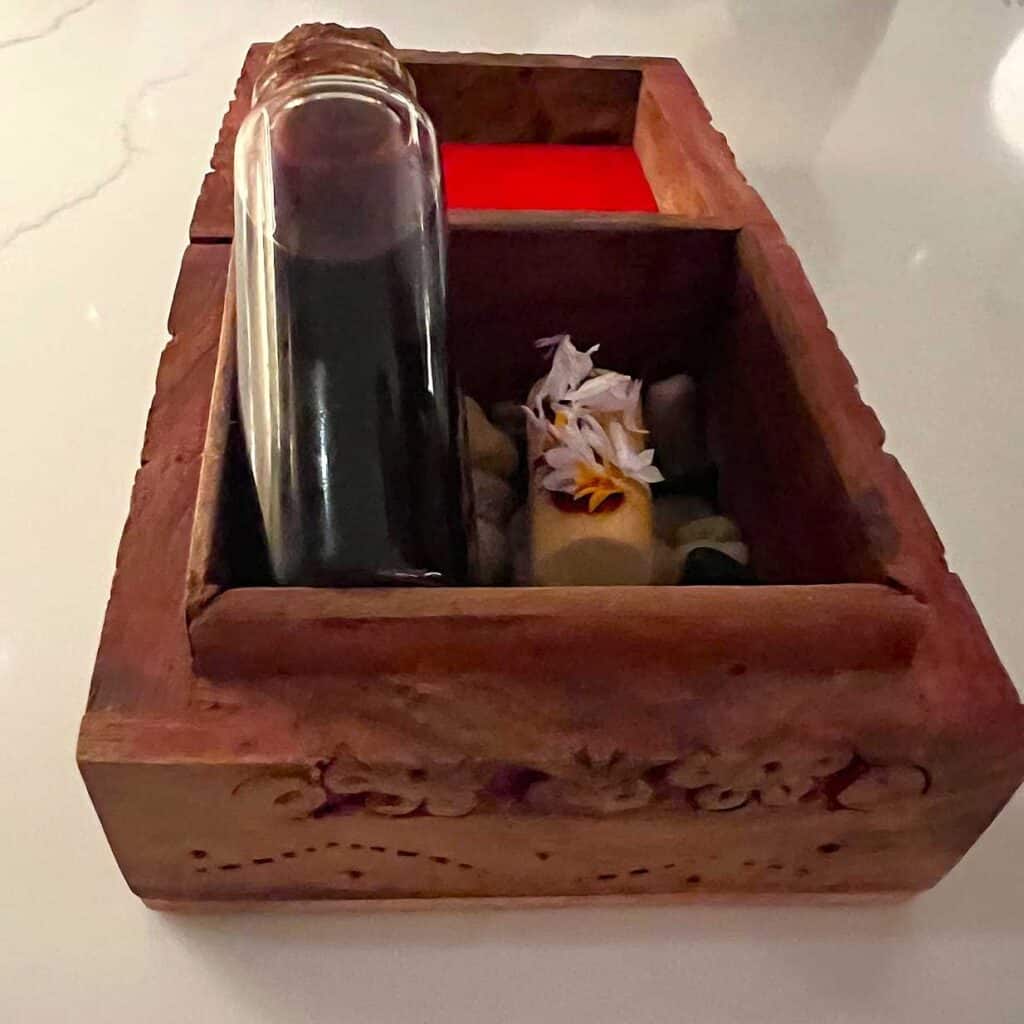
Canapé
Not counted as one of the seven courses, the Welcome Canapé, or introductory bite to the Tasting Menu, is a rigatoni-sized, crispy tube filled with slightly sweet foie gras, sitting on stones within a small wooden box. A Michigan cherry gel and edible flower decorate the top. On the left side is a lactose-fermented grape soda, served in a corked tube, which isn’t as sweet as you’d expect. It tastes a little salty and a little bit like vinegar. Served in a divided rectangular box, the divider elevates the tube, which is situated next to the canapé.
Interaction: Remove the cork, and alternate between sipping the drink and biting the canapé in approximately three bites.
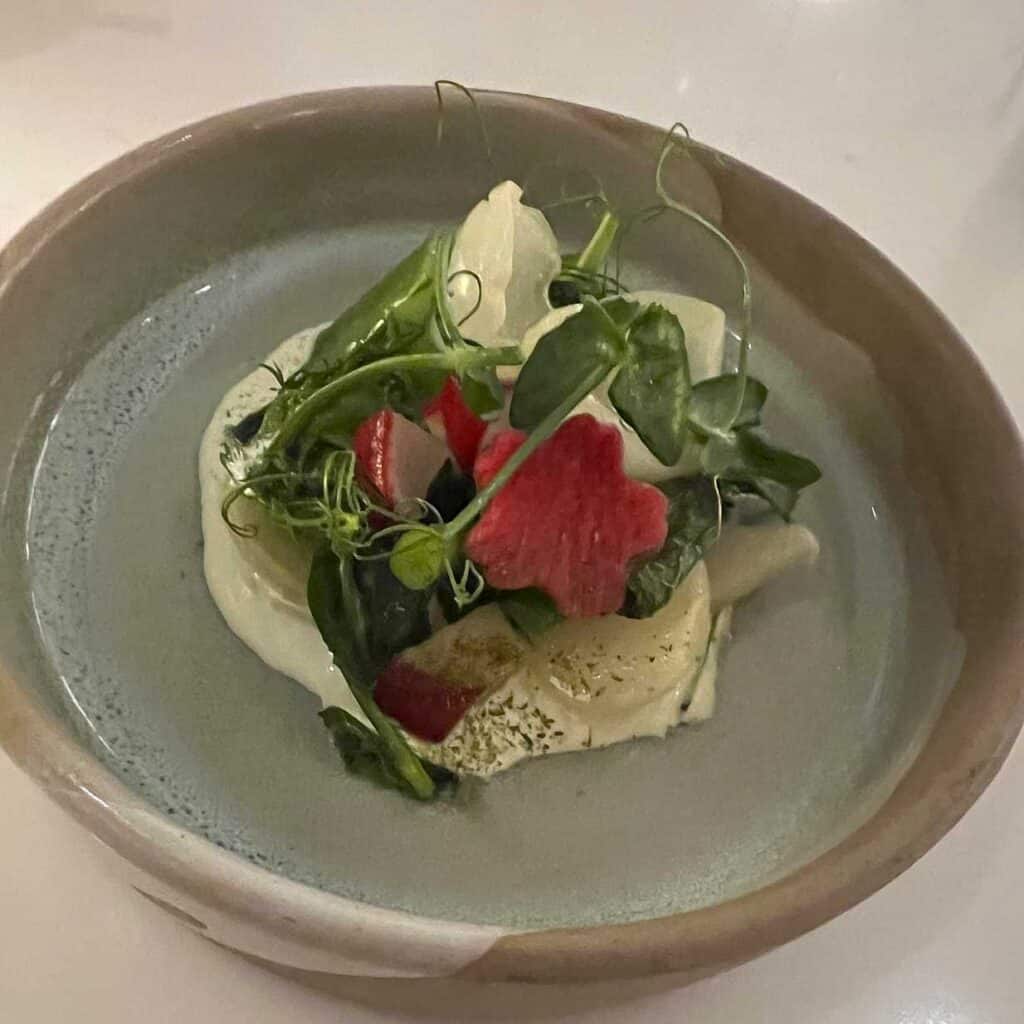
First Course: Autumn Vegetable Salad
The first official course of the tasting menu was an autumn vegetable salad. The standout technique in this dish was the watermelon flower radish cutout. It was a light starter featuring seasonal vegetables.
Interaction: The watermelon radish, cut into a flower shape, creates a moment of visual delight. You’ll naturally pause, look closer, and admire the craftsmanship. Since this course was substituted, the original Kanpachi Crudo course may have been more interactive.
This is where I should have trusted the process. The Tasting Menu offered a Kanpachi Crudo. I haven’t tried sushi, and I was afraid to go for crudo. Kanpachi (pronounced kahn-PAH-chee) is a premium Japanese amberjack, prized especially in sushi and sashimi for its clean flavor and firm texture. While my salad was fine, this is an experience I should have embraced.
Second Course: Wood-Roasted Maitake
The maitake mushrooms come from Stoney Creek Farm, located in Ferndale, Michigan. They marinate them in yellow curry and maple sauce and then roast them in the wood-fired oven. The mushrooms are the foundation of the dish. Then, it’s topped with a smoky turnip cream and a green curry salsa Verde, with crispy shallots and carrots. This plate focused on their signature vegetable-driven dish, illustrating the vegetable-forward philosophy.
If you’re not having the Tasting Menu, the wood-roasted carrots were another dish that exemplifies this. The carrots would be a side dish large enough for two people to share.
Interaction: I found myself searching for the maitake, not because there weren’t enough, but because I was enjoying the flavor so much.
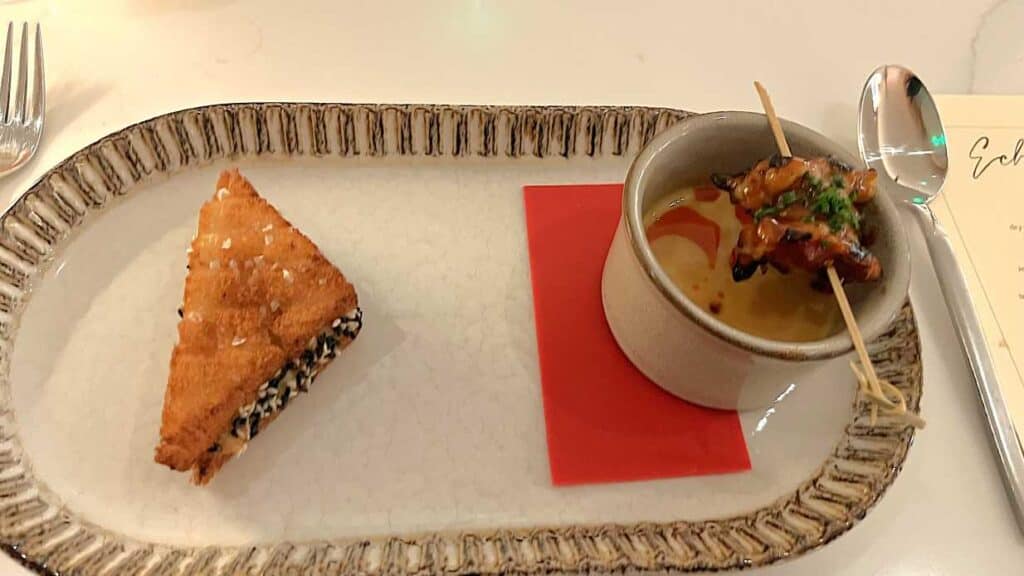
Third Course: Shrimp Toast
The shrimp toast features shrimp, green garlic, and cilantro on Japanese milk bread, then fried. Accompanying the sandwich is a lobster bisque with chili oil, and a lobster tail that has been char-grilled and glazed in a tamarind barbecue sauce, inspired by grilled cheese and tomato soup, especially when dipping.
Interaction: The server said he ignored his utensils and went for it with his hands, recommending, “You guys are more than welcome to do the same, and in fact, the chef encourages it.”
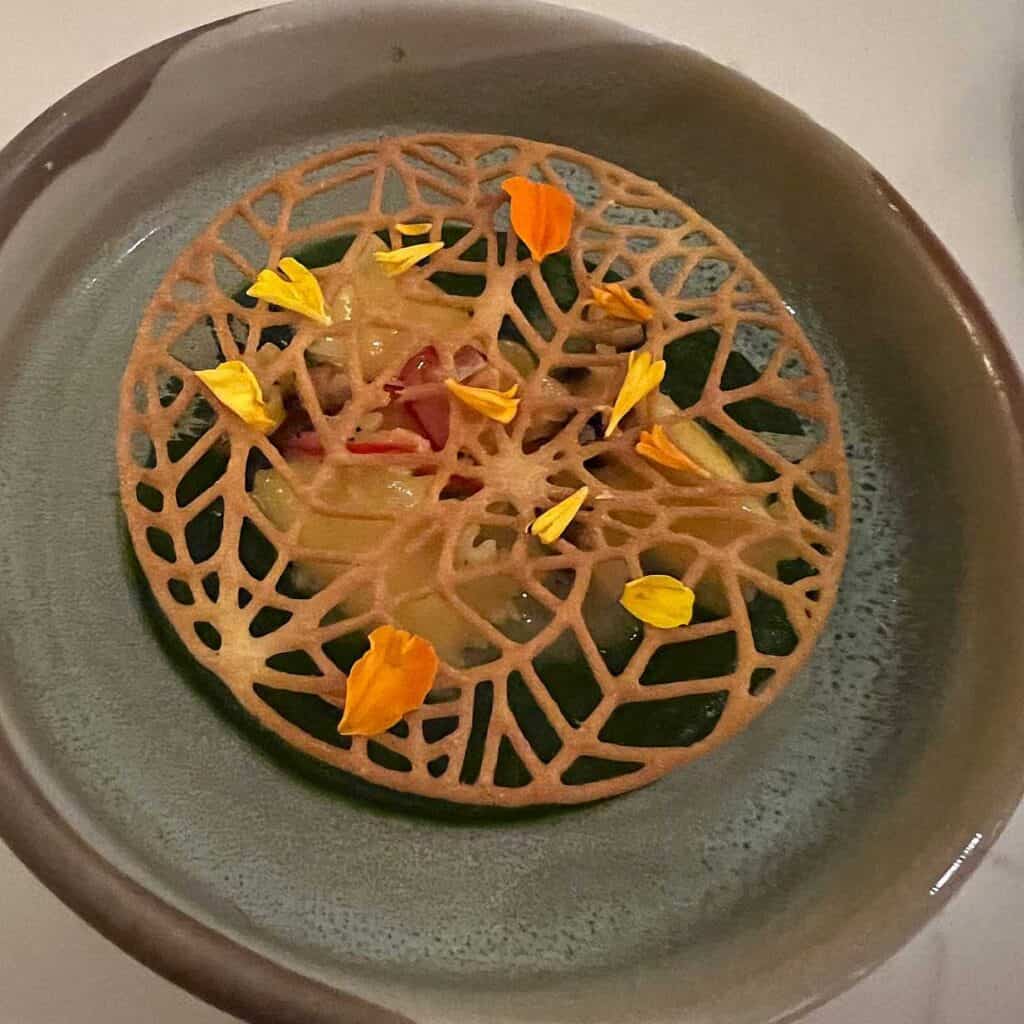
Fourth Course: Saffron Agnolotti
Agnolotti (pronounced ahn-yo-LO-tee) is a type of stuffed pasta from the Piedmont region of northern Italy. Think of it as a cousin to ravioli, but with its own distinctive shape and tradition.
The pasta has a corn-mascarpone filling, accented with poblano sauce and pepper purée. On top, it had a delicate, lacy yellow cornmeal tuille, a cookie cracker hybrid for that perfect bite. Yellow and orange edible flower petals were sprinkled across the top for color.
This course balances the menu, bridging between lighter and heavier dishes.
Interaction: The server recommended using the fork and lightly cracking the tuille so I could get a complete bite each time. The action was fun, yet I found it sad to break such an intricate piece. That’s the downside to a beautiful presentation: to enjoy the dish, you ruin the look.
Fifth Course: Stonefall Farm Wagyu Bavette
This dish showcases the wood-fired oven. The Michigan olive-fed Wagyu is from Stonefall Farm, located in Allen, Michigan, about 45 minutes south of Ann Arbor. It’s a special farm because it is the only farm in Michigan that has recertified Wagyu beef. All their cattle are descendants of Japanese Black Wagyu.
In the center of the plate, a pool of demi-glace made with green tea and Szechuan peppercorns accompanies rare beef slices, which overlap the sauce. Next to that were potato churros with a crème fraîche and white cheddar mousse topped with rendered Wagyu bacon. This dish is Echelon’s version of a loaded baked potato, but on an elevated echelon.
I felt that, given this was a tasting menu, the portion size of this dish was generous. You won’t find a picture of this dish, as I was so excited that I didn’t take one until the plate was half eaten.
Interaction: Drag the Wagyu through the sauce and dip the potatoes.
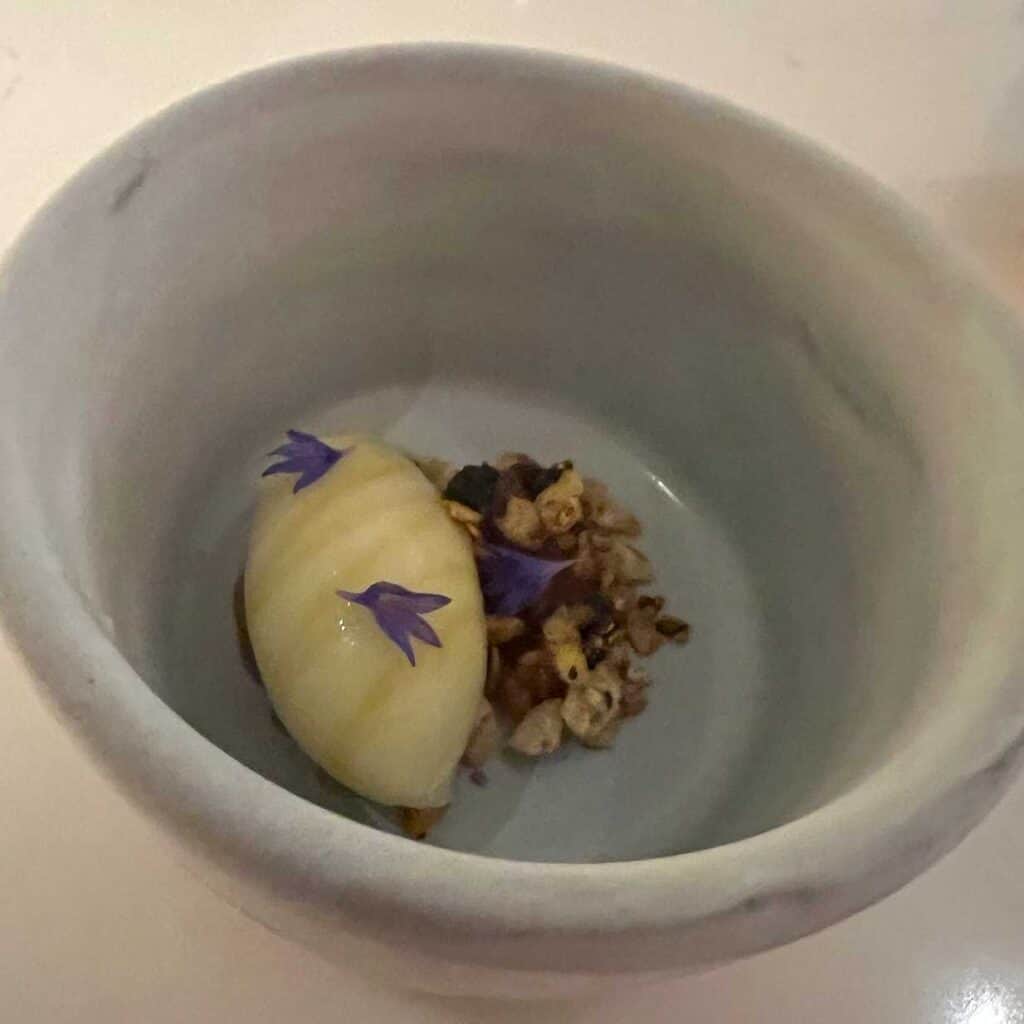
Sixth Course: Green Apple Sorbet
A bright green apple sorbet sat over a warm drizzle of maple-tamari caramel, and next to it were little piles of puffed rice and apple compote.
Interaction: I loved the interactive twist on this palate cleanser. The fun was in creating your own combination—whether you wanted a sweet, caramel-forward bite or something crunchier and more tart. Each spoonful felt a little different, which made this simple palate cleanser feel surprisingly engaging before dessert arrived.
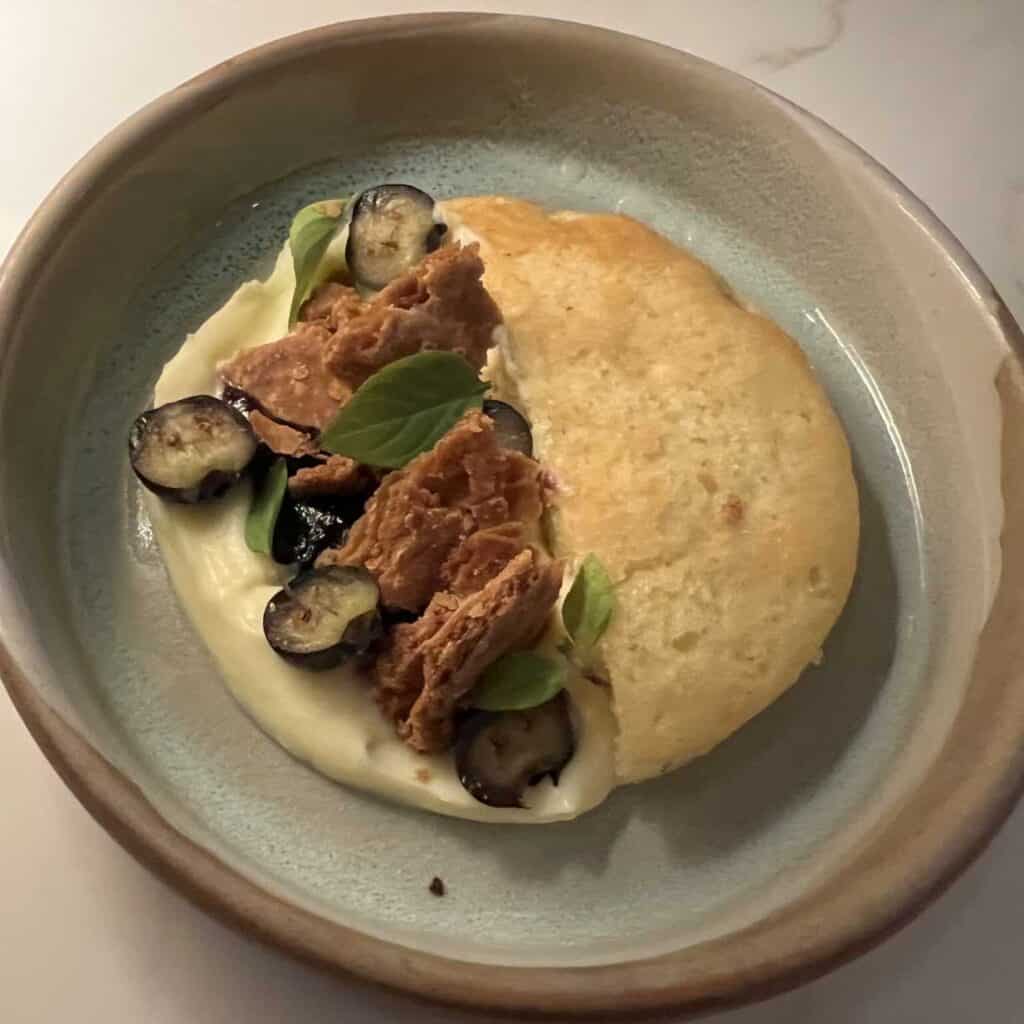
Seventh Course: Root Vegetable
The Tasting Menu featured a root vegetable dessert, including a carrot cake with milk chocolate, parsnip, sunchoke, rosemary caramel, hazelnut, and brown butter ice cream. Since I have a nut allergy, they were flexible and offered an alternative dessert.
I loved how this dessert invited a little play. One side of the plate held a silky blueberry cream paired with a sweet piece of cornbread, while the other offered a rich corn pastry cream layered with fresh berries and a rosemary shortbread.
Interaction: The fun was choosing how to enjoy it, tasting each part on its own, or mixing and matching textures to build the perfect bite. The rosemary took the lead, weaving through every combination to make the whole dish feel unexpectedly herb-forward.
Drink Pairings and Bar Program
Echelon pairs its menu with a polished but relaxed bar program, making the tasting menu a smart way to experience its range of flavors. Each course of the Tasting Menu was expertly paired with a selection from their wine cellar. I had a pre-dinner cocktail but decided against the wine pairing with the Tasting Menu.
Who Is This Menu for?
The seven-course Tasting Menu is a relaxed-paced dining experience that takes about two hours. I took pictures along the way and had a leisurely conversation with a friend as we dined. She had the three-course menu, which included a salad, entrée, and dessert. I’d recommend that if one person at the table is having the tasting menu, the entire table go for it to keep the meal’s pace.
While this article focuses on the Tasting Menu, you’ll find many other options at various price points. At $125, plus another $80 for a paired wine with each course, the meal may be out of many diners’ budgets. However, that doesn’t mean you won’t find more affordable options. You’ll find choices like a spicy chicken sandwich for $22 and a smashburger with fries for $24. Slightly higher than some Ann Arbor restaurants, but within range for a special dinner.
Related: 10 Best Dinner Restaurants in Ann Arbor, Michigan
Piper’s Pro Planning
The restaurant isn’t open on Mondays and Tuesdays. On Sundays, they have a three-course dinner for $49. They can be busy during University of Michigan events or downtown festivals. When making reservations, consider requesting a seat where you can see the wood-fired oven.
A tip for making the most of the tasting menu is to let the server know dietary constraints in advance.
Nearby parking garages are within a block or two, and you’ll also find street parking.
What are the advantages and disadvantages of choosing the tasting menu experience?
Choosing the tasting menu is great if you want a curated, immersive experience, but it can feel lengthy, rigid, and pricey compared with ordering à la carte.
Key Advantages
The Tasting is a deep dive into the chef’s vision, letting you sample many small courses designed to flow together, so you experience more of the kitchen’s techniques and ingredients and encounter a story that you might not with a single entrée. Highly recommend trusting the process and not requesting to “mess with” the chef’s vision.
Multiple small plates let you try a broader range of flavors and preparations, including signatures and experimental dishes that may not appear on the regular menu.
The courses and optional beverage pairings are usually structured to build in intensity, making the meal feel cohesive and special-occasion worthy.
Key Disadvantages
Tasting menus are often among the most expensive options in a restaurant and can take several hours, which may not suit every budget or schedule. You won’t want to be rushed, so that you can enjoy the experience.
The chef sets the sequence and core components, so even with some substitutions, this format can feel restrictive if you have many dislikes, strict diets, or prefer to choose each dish yourself.
Courses are intentionally small but numerous; some diners dislike tiny bites, while others find that many back-to-back dishes can become overwhelming or blur together.
When it Makes Sense
The Tasting Menu is best for special occasions, food-focused trips, and when you want to see what the kitchen can really do and are open to surprise. Skip it when you’re on a tight budget or schedule, have picky eaters or complex restrictions in your group, or prefer choosing a couple of substantial courses you know you’ll love.
I’m glad I tried it. I enjoyed it, but next time I can’t wait to try some of their other offerings. The menu is exciting and decidedly different from what you’ll find at many restaurants in Ann Arbor.
Share your own Echelon experiences in the comments and save this post to add to your itinerary for your next trip to Ann Arbor.
While Piper is a lifelong Michigander, she’s had adventures worldwide. Bomb-sniffing dogs chased her in the middle of the night in Bogota (working late), gate agents refused her boarding to Paraguay (wrong visa), and US Marshals announced her seat number on a plane while looking for a murder suspect (she’d traded seats). It’s always an adventure! She even finds exciting activities in her home state of Michigan, where she lives in Lansing with her husband, Ross Dingman, her daughter, Alexis, and two granddaughters.








What a special dinner experience-the maitake mushrooms sound unbelievable-thanks for sharing.
The food looks delicious. It is wonderful that they could provide an alternative dessert as well to accommodate your allergies.
This sounds like such a memorable dining experience. I really like how you explain the tasting menu as a story, not just a meal, and how honest you are about giving up control with allergies. The wood-fired, vegetable-forward focus and relaxed but attentive service make Echelon feel special without being intimidating. It truly sounds like the kind of place where dinner becomes the whole evening, especially for food lovers who enjoy being surprised.
I have mixed feelings about tasting menus. Sometimes they strike me as being a bit pretentious, more showiness than substance. But they can be fun if you’re in a group and you can share opinions with other diners. Anyway, I must say, the plating was very impressive. Looks like you had a very enjoyable evening.