

TL;DR
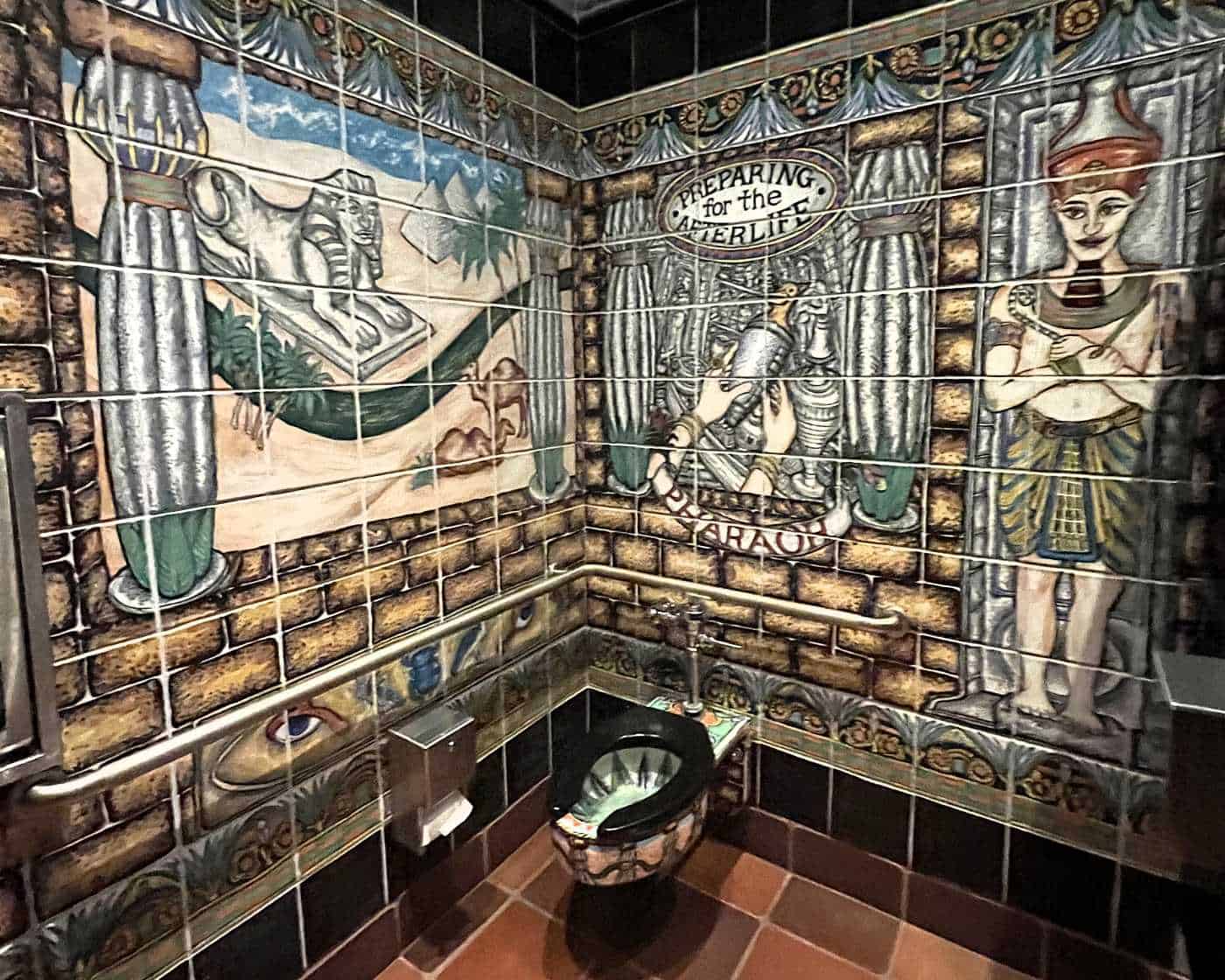
- The John Michael Kohler Arts Center in downtown Sheboygan has washrooms designed by artists as permanent, functional artworks.
- The rooms grew out of the Arts and Industry residency, where artists create work inside the Kohler Co. factory.
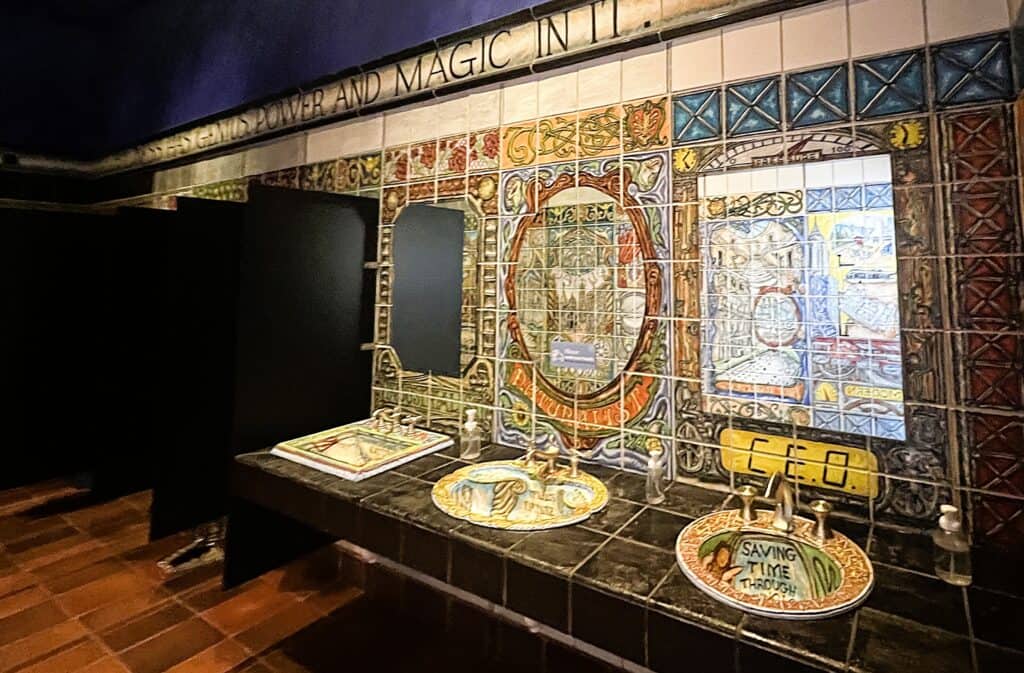
- Each washroom has its own theme, built from handmade tile, cast metal, and enameled surfaces.
- Visitors are welcome to view them. Knock first, ask staff for help, and visit during quieter hours.
- Pair the trip with the Art Preserve, the center’s second Sheboygan site devoted to artist-built environments.
Why Sheboygan’s Museum Bathrooms Are Real Art
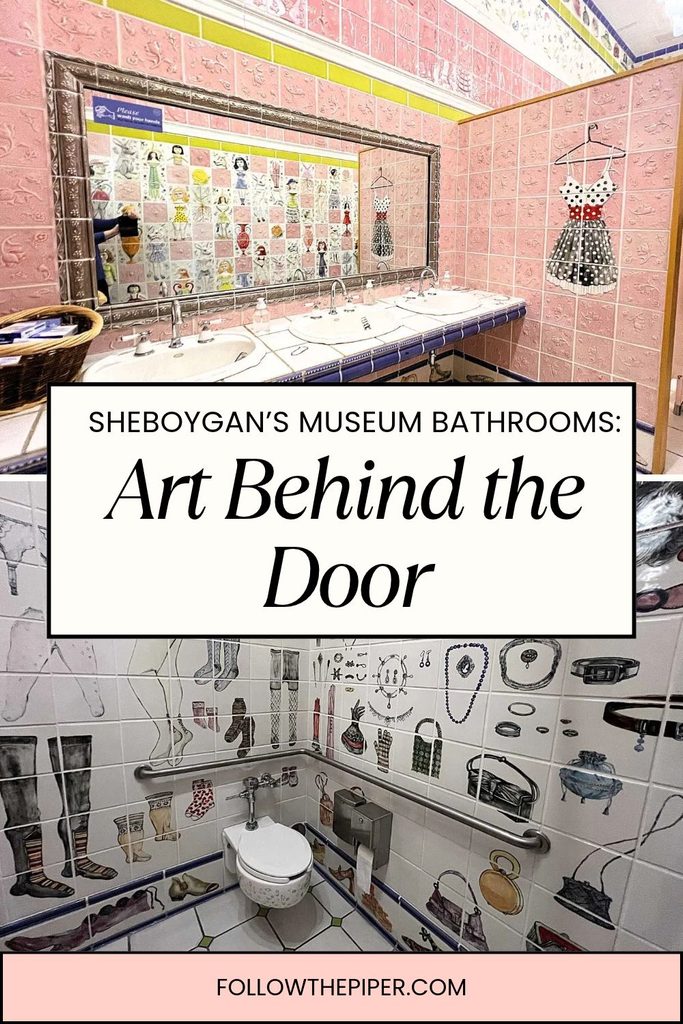
The washrooms at the John Michael Kohler Arts Center are site-specific artworks. Artists designed every surface, from floor tile to sinks, so the room itself becomes the piece.
The center treats them as part of its permanent holdings, and it promotes them as a reason to visit. They also earned national attention when the arts center won Cintas’s America’s Best Restroom contest in 2014.
Three qualities separate these rooms from a decorated public bathroom:
- Single vision. One artist or team controls the whole room, so the design reads as one unified work.
- Industrial craft. Pieces were produced with factory-grade materials built to survive daily public use.
- Full function. Every toilet, sink, and mirror works. You experience the art by using the space.
How the Kohler Factory Made These Rooms Possible
The washrooms exist because of a partnership between the arts center and Kohler Co., the plumbing manufacturer based in nearby Kohler, Wisconsin.
That partnership is the Arts and Industry residency, which the arts center launched in 1974. It works like this:
- Artists move into the factory. Residents spend weeks or months working inside Kohler’s industrial pottery, foundry, and enamel shop.
- They learn production methods. Factory associates share techniques for slip casting, iron and brass casting, and enameling that most studios cannot offer.
- They create at industrial scale. Artists gain access to kilns and equipment large enough for tile walls and full fixtures.
- The work comes home to Sheboygan. Several residents applied what they learned to design the arts center’s washrooms, turning factory skill into permanent public art.
- The result is art made with the same materials and durability as the fixtures in your own home.

Why Sheboygan’s Bathrooms Deserve a Detour
Calling these spaces “decorated restrooms” is a little like calling the Grand Canyon a ditch.
The artists didn’t simply choose paint colors and hang something above the sinks. They transformed practical spaces into works of art, using ceramics, metalwork, and unexpected imagery to explore everything from local water systems to domestic labor. The Arts Center has six artist-designed washrooms, while the Art Preserve continues the tradition with four installations.
You still get working plumbing. You also get something to think about while washing your hands.
For travelers who appreciate the unusual discoveries that make a destination memorable, these washrooms deliver.
They’re the sort of experience you probably didn’t expect to describe enthusiastically when someone asked about your Wisconsin getaway. “Wonderful museums. Fascinating art. Now, let me tell you about the toilets.”
How Art and Industry Got Together
The backstory begins with Arts and Industry, a residency program established in 1974 through a collaboration between the Arts Center and Kohler.
That partnership opens possibilities beyond the typical studio experience. Manufacturing processes become tools for experimentation, and familiar materials take unexpected forms.
Longtime Arts Center director Ruth DeYoung Kohler II helped carry that creative spirit into the building’s most practical rooms. In the late 1990s, she oversaw commissions for six artists to transform its public washrooms into artworks.
It was an ambitious answer to a question most museums never ask: What if the art didn’t stop at the bathroom door?
The John Michael Kohler Arts Center: Start Downtown
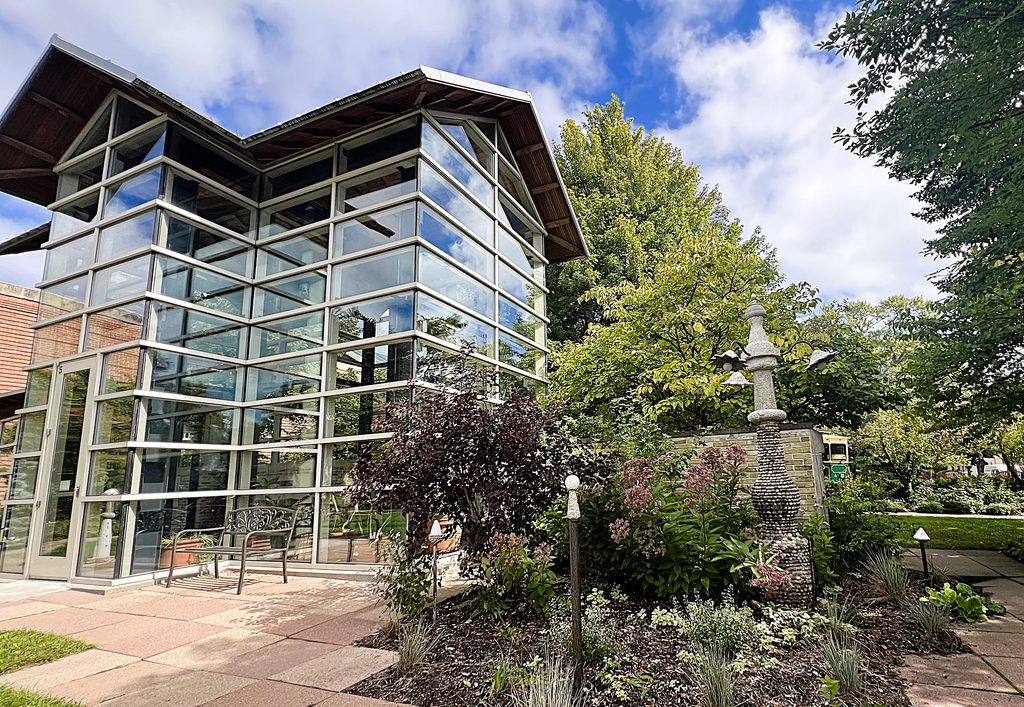
Begin at the John Michael Kohler Arts Center in downtown Sheboygan, where changing contemporary art exhibitions share the visitor experience with those celebrated washrooms.
It’s tempting to treat the bathrooms as a quirky extra. Instead, give them the attention you’d give a gallery. Look closely, notice the materials, and consider the artists’ choices.
Just remember that someone waiting outside may have something more pressing than art appreciation on their mind.
What You’ll Find Inside the Washrooms
Each room has a distinct personality. Use this guide to know what details deserve a closer look.
- Walls: Hand-painted or molded tiles that often tell a story across the entire room
- Floors: Patterned tile that extends the artist’s theme underfoot
- Sinks and fixtures: Custom cast or enameled pieces produced during factory residencies
- Mirrors and frames: Sculptural borders that tie the room’s imagery together
- Ceilings and corners: Small hidden details that most visitors overlook
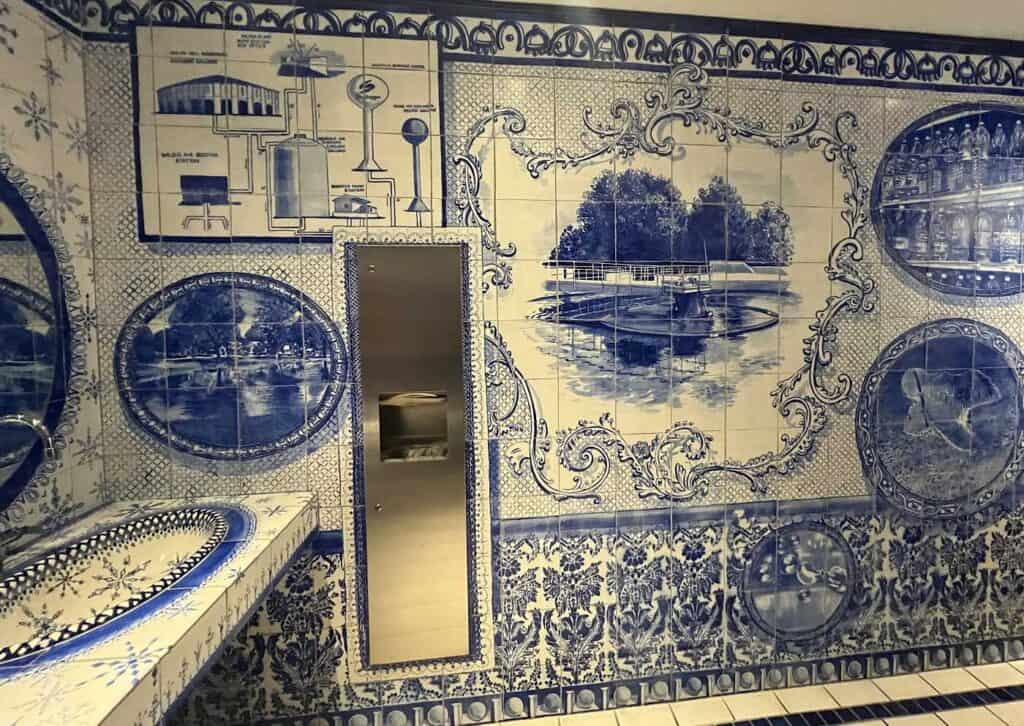
The best-known example is Ann Agee’s Lake Michigan Ladies Room. It is covered in blue-and-white tile inspired by traditional Delft ceramics. Look closely, and you’ll find scenes of local life, including images connected to the region’s factory work.
Give each room at least a few minutes. It’s easy to miss the layered imagery at a glance.
Ann Agee’s Blue-and-White Sheboygan
Ann Agee’s Sheboygan Men’s Room draws on blue-and-white ceramic traditions while exploring a subject closely connected to its setting: water.
The imagery depicts places around Sheboygan County, including Lake Michigan, a car wash, a community swimming pool, supermarket shelves stocked with bottled water, and a water treatment plant.
At first, the appeal is decorative. Look longer, and the room becomes a portrait of water’s role in everyday life.
There’s something especially fitting about encountering that idea beside a faucet. Water is scenery, recreation, infrastructure, commerce—and the thing you’ve just used to wash your hands.
That’s a substantial amount of local storytelling for a room most travelers usually hurry through.
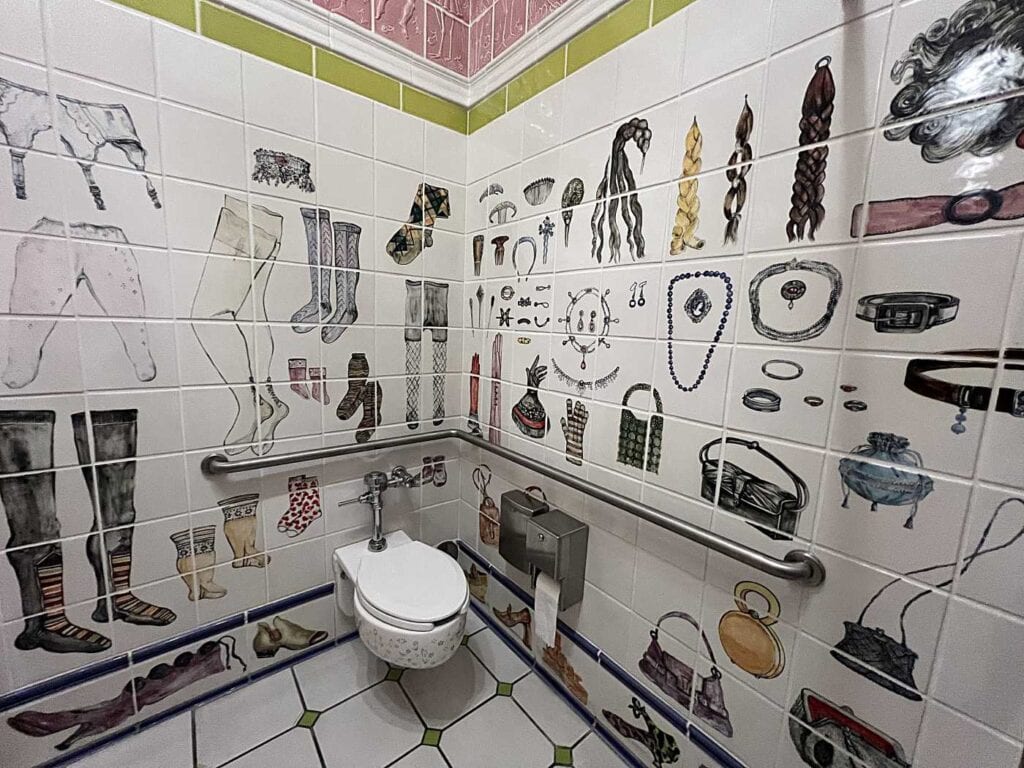
Photo Credit: Amy Piper / Follow the Piper
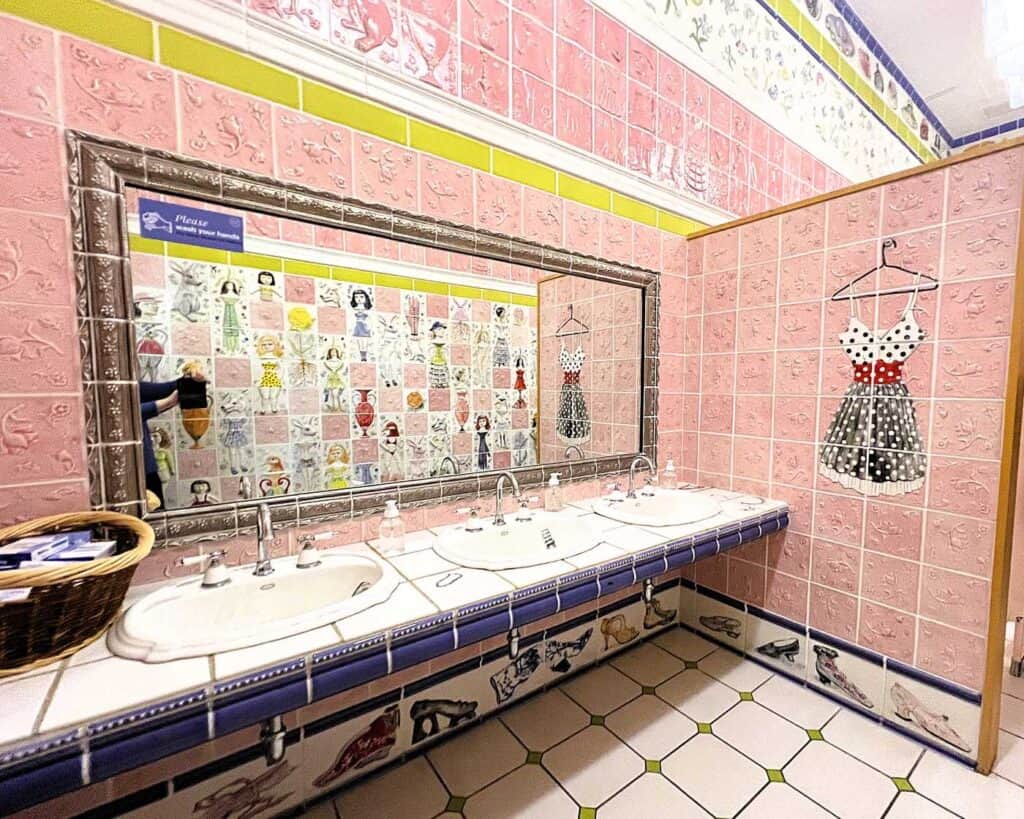
Photo Credit: Amy Piper / Follow the Piper
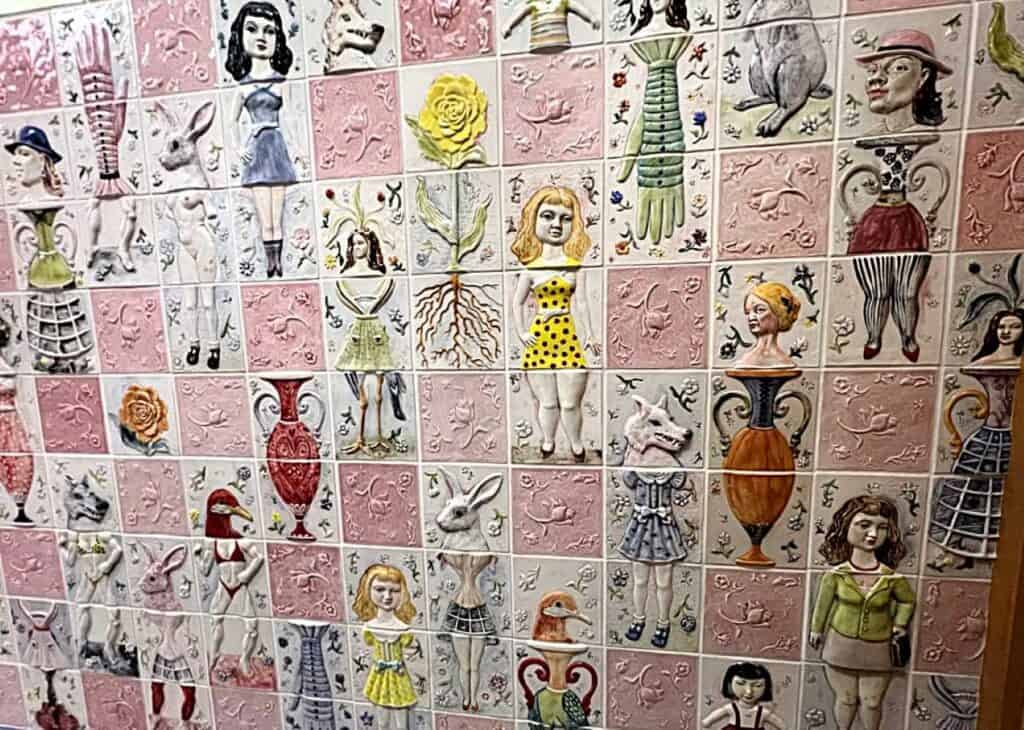
Cynthia Consentino’s The Women’s Room
Cynthia Consentino’s The Women’s Room, completed in 2005, takes the conversation in another direction. Its ceramic imagery brings together female body types, animals, plants, and objects to examine identity and society’s definitions of femininity.
Familiar forms invite visitors to consider the expectations and associations surrounding women’s identities. The room rewards both a quick look and a more thoughtful inspection.
Apparently, checking your reflection can come with a little reflection.
Creativity Starts Young
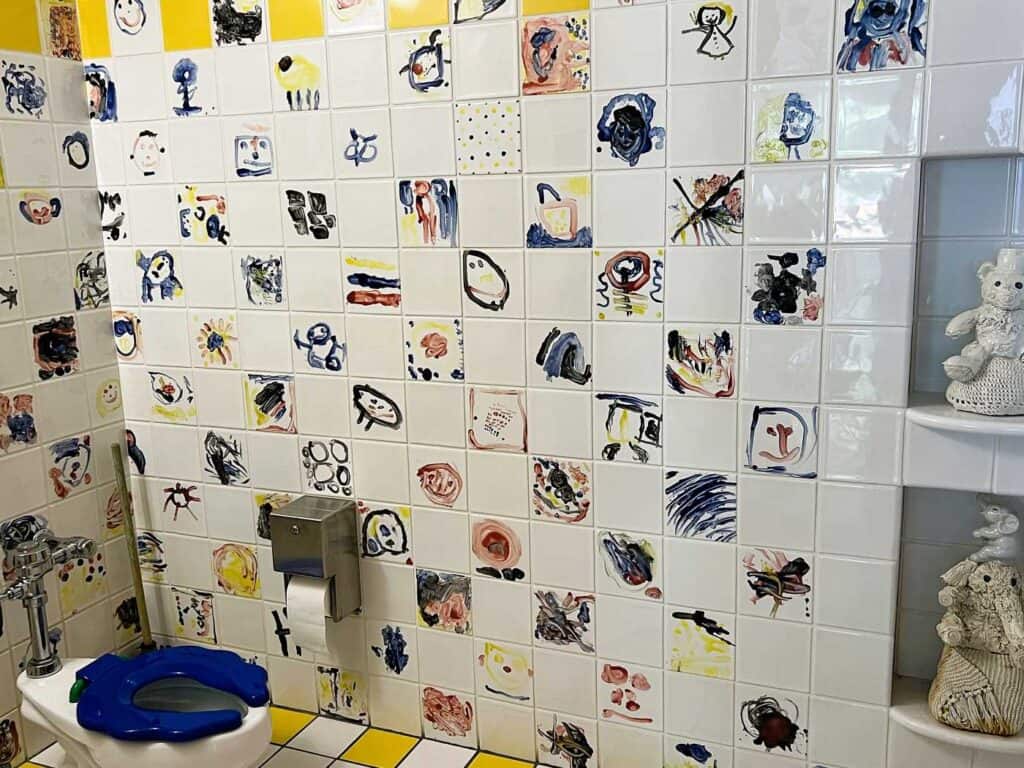
The Children’s Studio washroom offers another perspective. Artist Casey O’Connor collaborated with 70 preschool-age children on Childhood Vitreous, combining primary-colored painted tiles with sculptural tributes to beloved children’s toys.
Children helped shape a space meant for them. That feels fitting. Young travelers often notice details adults walk past.
We visited while the kiddos were at lunch. You won’t be able to see this one if the kids are in the classroom, since it’s in the daycare area.
The Art Preserve: Four More Reasons to Look
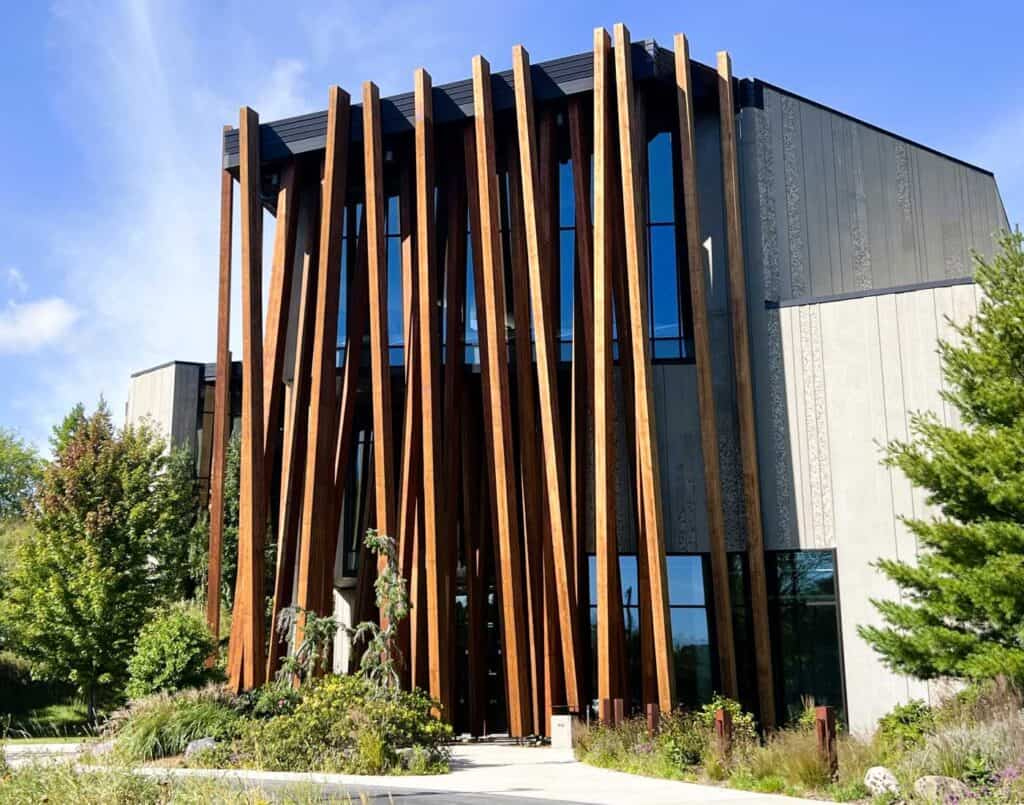
Just a ten-minute drive from the downtown Arts Center, you’ll find the Art Preserve. It highlights artist-built environments and the immersive spaces that go beyond single artworks and create entire, imaginative worlds.
The 3-floor Art Preserve opened in 2021 as a second location focused on artist-built environments. It showcases large pieces and full-room installations made by people who turned their homes and yards into art.
Even the washrooms reflect this creative spirit. Wisconsin artists Beth Lipman and Michelle Grabner designed the first-floor installations. Joy Feasley and Paul Swenbeck worked together on two more washrooms, which are linked by a wintry landscape they imagined.
My friend asked, “Didn’t we already see the museum bathrooms?” I said yes, but these are different.
We almost missed the art in these restrooms. We went to the second floor first, and the two restrooms there are plain. They’re waiting for an artists special touch. So, we almost left, but on our way out, I spoke to the person at the front desk. They referred us to the first- and third-floor bathrooms, which were indeed works of art.
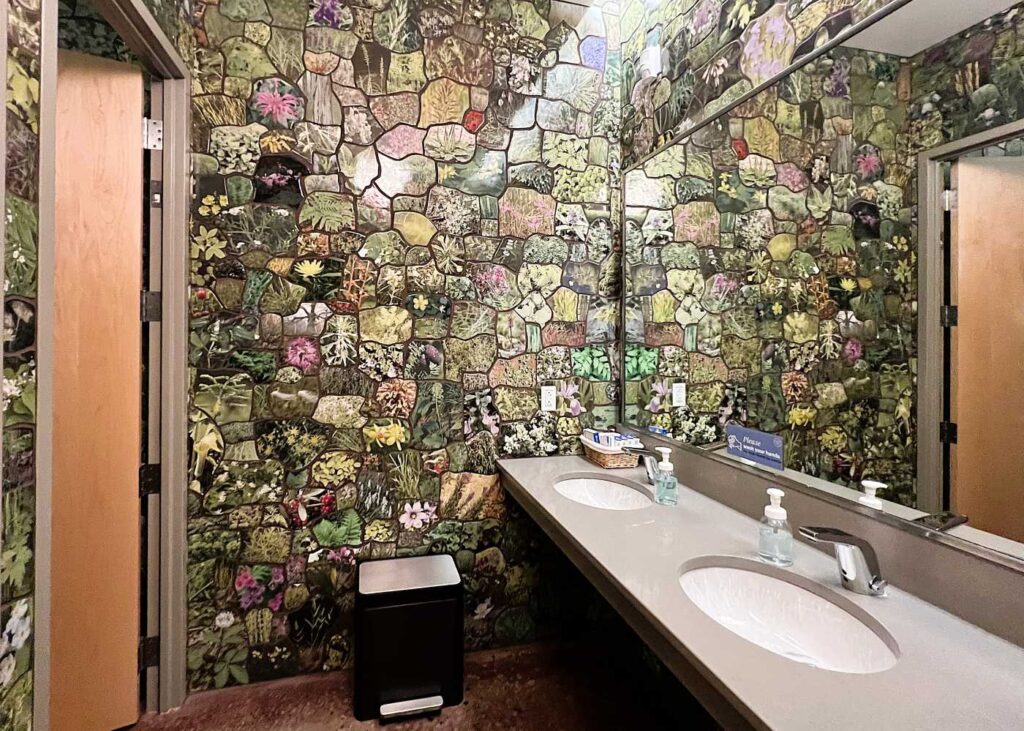
Beth Lipman’s Wild Madder
Beth Lipman’s Wild Madder shows over 1,280 plant species found in Sheboygan County. The piece explores the loss of native plants and animals, as well as the impact of climate change.
The installation also uses material from Kohler’s WasteLAB, made from a recycled factory byproduct. Human traces are part of the piece. Staff walked through the stain on the floor and used the fixtures before sealing those marks.
Most bathrooms are designed to hide any sign that someone was there.
Lipman turns those traces into something meaningful.
Her installation invites visitors to notice both the natural world and the marks people leave behind.
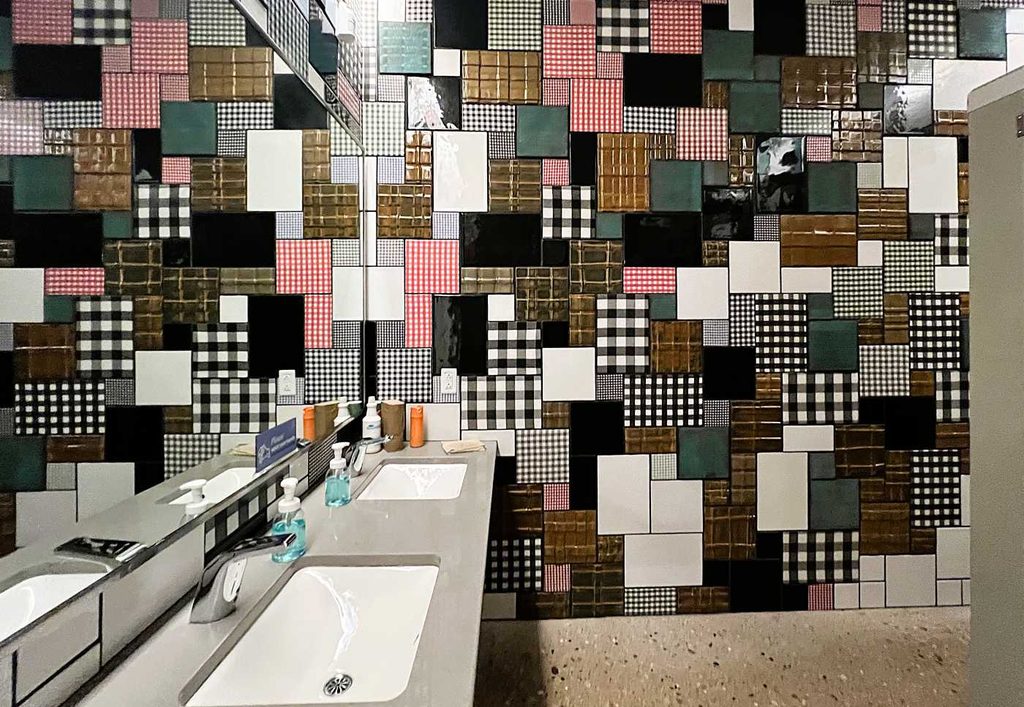
Michelle Grabner’s Patterns and Practicalities
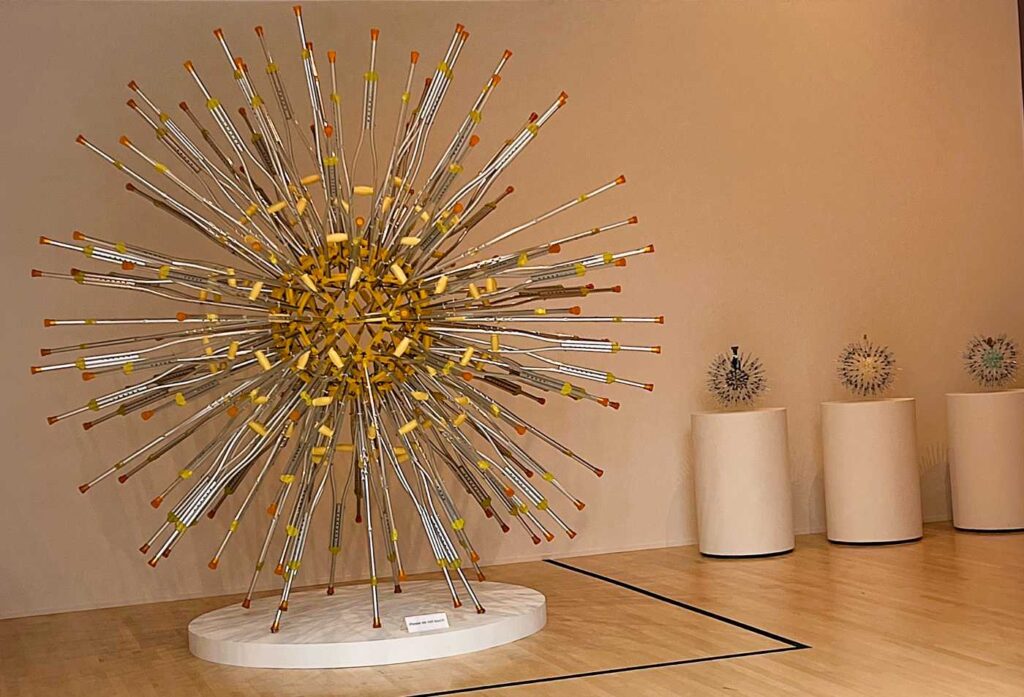
Michelle Grabner drew inspiration for Patterns and Practicalities from a crocheted granny-square blanket. Ceramic tiles, floor-to-ceiling patterning, and cast-brass afghans connect familiar domestic handiwork with industrial materials.
Grandma’s blanket has entered a rather ambitious new phase.
The installation also includes ceramic versions of toilet paper rolls, spray bottles, and a loaded custodial cart, highlighting the labor that maintains everyday spaces.
It’s a sharp observation in a restroom. You can linger over the artwork because someone does the less-glamorous work of keeping the room usable.
Grabner gives that work some well-deserved attention.
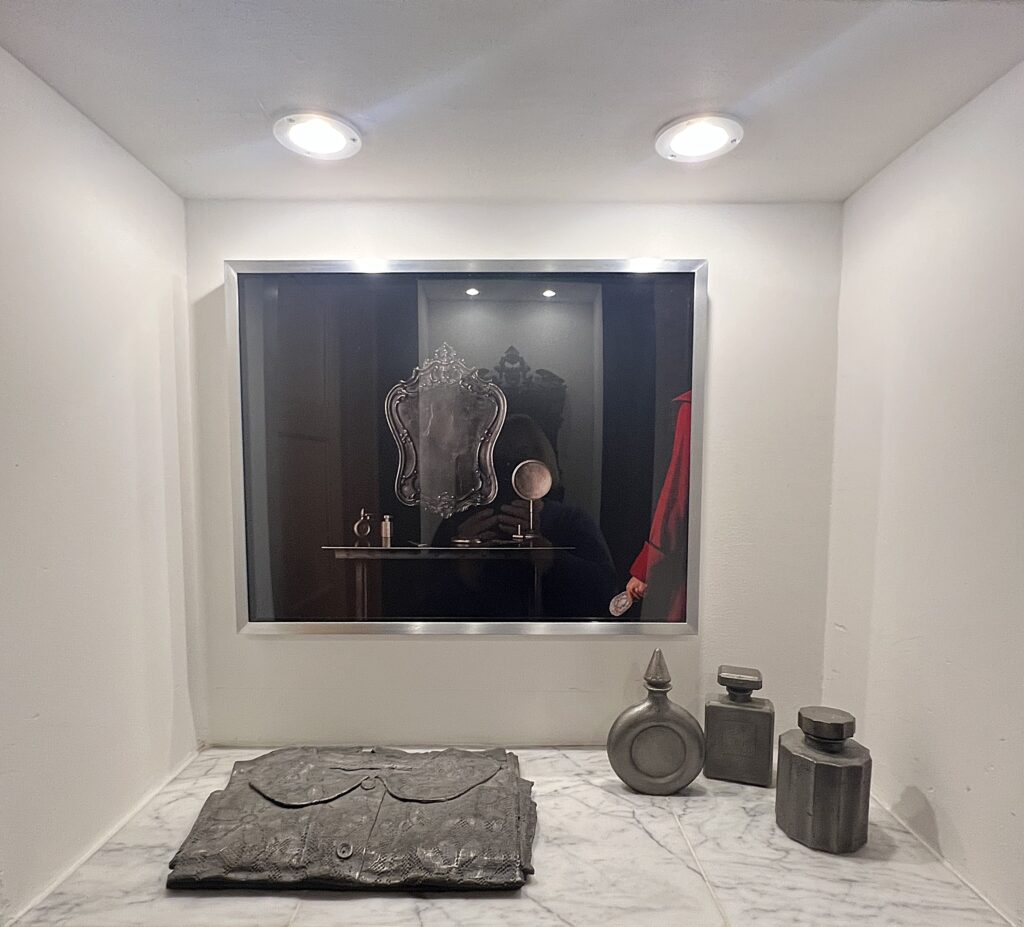
Photo Credit: Amy Piper / Follow the Piper
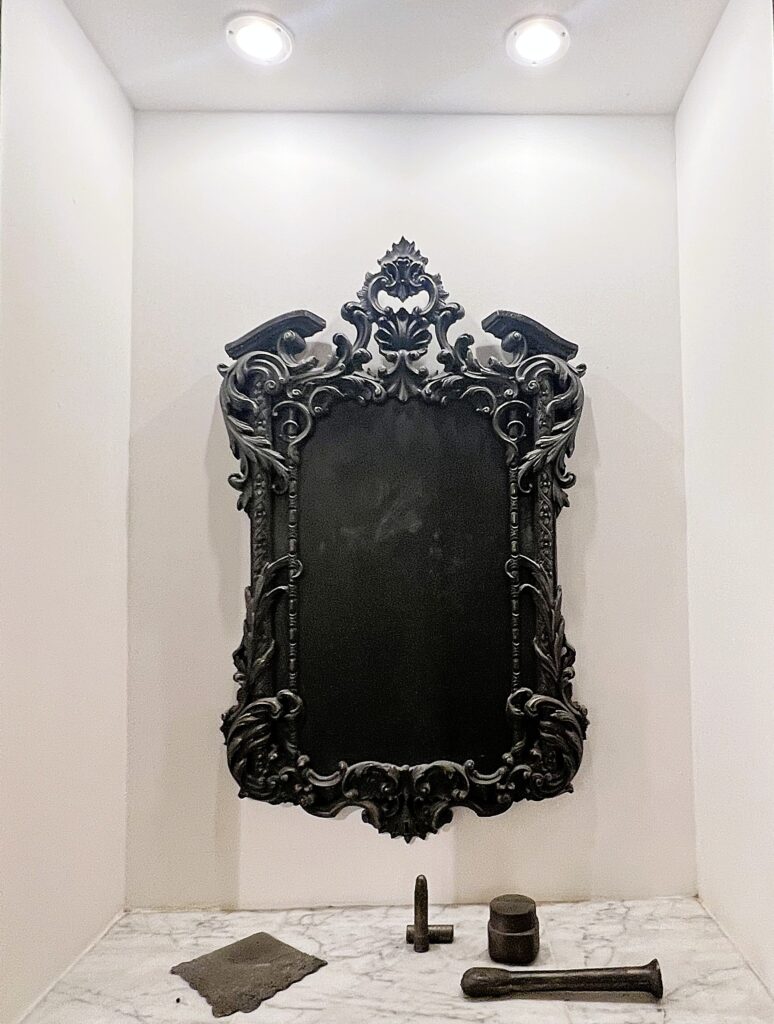
Photo Credit: Amy Piper / Follow the Piper
Listen, the Snow Is Falling
Joy Feasley and Paul Swenbeck’s Listen, the Snow Is Falling connects two washrooms through a hidden diorama viewed through openings in the walls.
One room resembles an ice cave and looks toward a candelabra representing the aurora borealis. The other offers a view of an ice-covered ledge and a ladder descending into a crevasse. Both feature one-of-a-kind sinks fabricated in Kohler’s foundry.
What begins as a practical stop becomes a glimpse into an unfamiliar world.
And you didn’t even need snow boots.
Piper’s Pro Planning: Touring Without Being Awkward
Touring a bathroom can feel awkward at first. These tips make it simple and respectful.
- Knock before entering, even if the room seems empty.
- Ask front desk staff about viewing rooms designated for another gender. They can show you rooms when they are unoccupied.
- Visit on a weekday morning or right after opening, when traffic is lightest.
- Check current photography policies with staff and never take photos while anyone else is inside.
- Bring kids along. Children often love the playful idea of a bathroom that is also art.
- Plan 20 to 30 minutes to see every washroom without rushing.
- A short, polite question to staff solves nearly every awkward moment.
Plan Your Artful Pit Stop
Admission to both museums is free. Find the Arts Center at 608 New York Avenue and the Art Preserve at 3636 Lower Falls Road in Sheboygan. Allow approximately ten minutes to drive between them.
Check current hours before your visit. Ask staff which artist-designed washrooms are open to view. These are functioning facilities, so please respect others’ privacy. Never assume an occupied restroom is available for sightseeing or photography.
The art galleries and bathrooms are wheelchair accessible.
Give the galleries plenty of time, too. The bathrooms may catch your attention first, but they invite you to explore both museums. Still, there’s something wonderful about finding art in a place you’d ordinarily hurry through. You arrive expecting a practical stop and leave with another story to tell.
Think back to that first assumption. A bathroom is just a bathroom. In Sheboygan, that belief keeps people from the work the museum is known for. These rooms carry decades of collaboration between artists and factory workers. They hold stories portrayed in tile and cast in metal. They prove that art can live in everyday places. Next time nature calls at the arts center, answer it gladly.
In Sheboygan, “Don’t miss the bathrooms” might be the most useful museum advice you’ll get. The building’s most memorable gallery might be the one with a locked door.
Planning the Rest of Your Sheboygan Art Day
The washrooms pair well with other stops that share the same spirit of artists working outside traditional rules.
- The arts center galleries. The John Michael Kohler Arts Center in downtown Sheboygan rotates exhibitions that focus on self-taught and contemporary artists.
- The Lake Michigan shoreline. Sheboygan’s lakefront and boardwalk are a short drive from the arts center, making for a relaxed break between stops.
- The village of Kohler. Just west of the city, you can see the factory behind the residency program.
FAQs About Sheboygan’s Artistic Bathrooms
You’ll find them at the John Michael Kohler Arts Center, 608 New York Avenue in downtown Sheboygan. The center’s Art Preserve, at 3636 Lower Falls Road, has its own artist-designed restrooms.
The artwork isn’t just on the walls. Artists designed the sinks, tiles, and even toilets. In Ann Agee’s Sheboygan Men’s Room, blue-and-white ceramics depict water imagery inspired by the Sheboygan area.
There are six at the downtown Arts Center. The Art Preserve is a separate location, with four. So, plan on two stops if you want to see the restrooms at both sites.
Yes. They’re working public restrooms. You don’t need to join a tour to see them.
Ask at the front desk before entering. Visitors may look inside restrooms designated for another gender when they’re empty, but check with staff rather than assuming it’s okay to walk in.
Check with staff about photography before you start snapping. These are working restrooms, so wait until the room is empty and keep other visitors out of your photos.
Pin this to your favorite Wisconsin Travel Board!
While Piper is a lifelong Michigander, she’s had adventures worldwide. Bomb-sniffing dogs chased her in the middle of the night in Bogota (working late), gate agents refused her boarding to Paraguay (wrong visa), and US Marshals announced her seat number on a plane while looking for a murder suspect (she’d traded seats). It’s always an adventure! She even finds exciting activities in her home state of Michigan, where she lives in Lansing with her husband, Ross Dingman, her daughter, Alexis, and two granddaughters.









0 Comments