

Calle de Cuchilleros, “street of the knife makers,” earned its name from the craftsmen who forged blades here for the butchers’ guild in Plaza Mayor above. In the seventeenth and eighteenth centuries, this corner of Madrid was a working landscape of meat warehouses, guild workshops, and taverns wedged into cave‑like rooms under the square’s buttresses. Botín, first Casa Botín, then later Sobrino de Botín, grew up in the middle of that world, an inn and eating house serving people who earned their living with knives and carcasses before it ever appeared in a novel.
In a Rush to Book Your Madrid Stay?
I loved my stayed in the Hotel Europa, at the Puerta del Sol, only a six-minute walk from the Plaza Mayor. It’s centrally located, and is a beautiful hotel with welcoming staff.
Walking there today, it’s easy to think first of Hemingway. But Botín was part of Madrid long before his characters sat down upstairs. Long before travelers started looking for the places he wrote about. The restaurant belongs as much to the old neighborhood around it, where butchers, knife makers, and markets once kept the city fed.
I wanted to understand all of that, not just the famous literary connection. So, this story looks at the street, the oven, the history, Hemingway’s short scene, and the cochinillo that still brings people to Botín today. I’ll also include the practical details in case you decide to go yourself.
From Knife Makers and Meat Markets to the World’s Oldest Restaurant
To understand Botín, start by looking back toward Plaza Mayor. The grand square has always been one of Madrid’s main gathering places, used over the centuries for ceremonies, markets, celebrations, and darker public events. But just below all that elegance were the working streets. The practical side of the city, where food was sold, tools were made, and Madrid kept itself going.
The most dramatic of Plaza Mayor’s gateways is the Arco de Cuchilleros, the Arch of the Knife Makers, on the southwest corner. Its steep steps solve the height difference between the formal square and the older streets below. For centuries, this was the busiest passage for merchants hauling goods, soldiers on the march, and locals dropping down into the quarter of taverns and workshops. On the street beneath the arch, knife makers’ guild workshops sold blades to the butchers whose stalls and the Casa de la Carnicería, meat depot, supplied the surrounding markets.
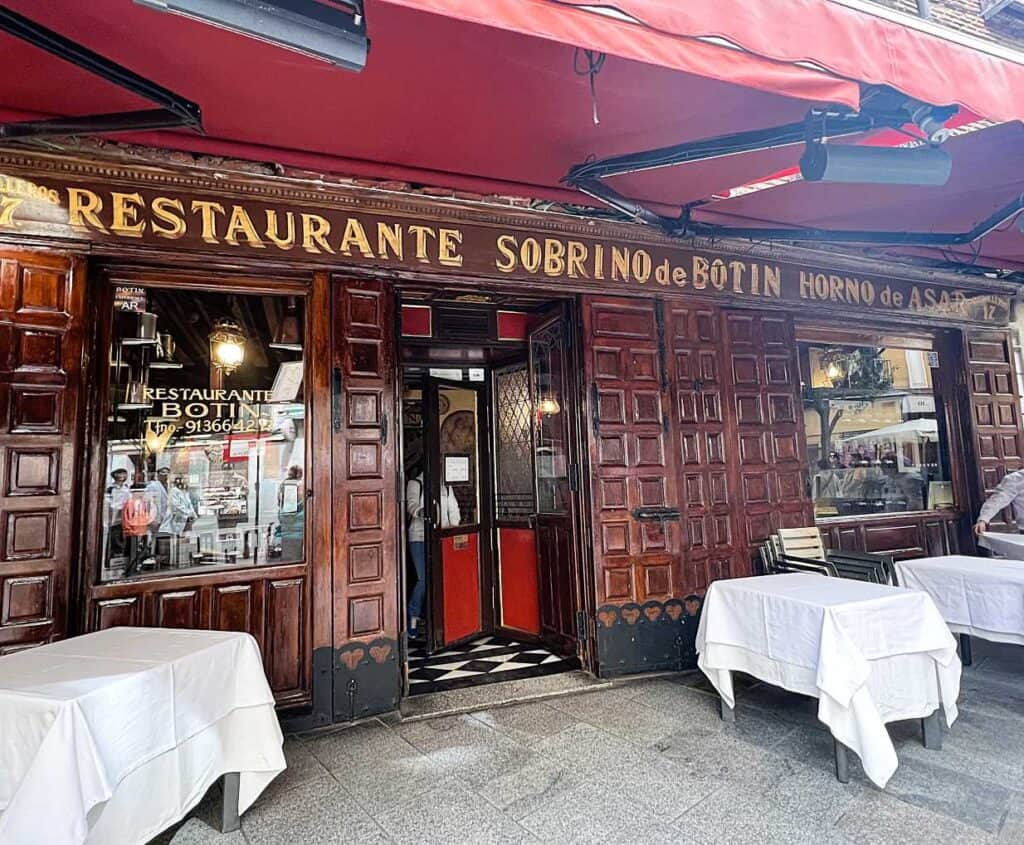
Botín sits midway down this slope at C. de Cuchilleros 17, exactly where you would expect a hardworking inn and tavern to be in the 18th century. It’s out of the formal line of sight, close to the meat and customers, and protected by the hillside.
The History
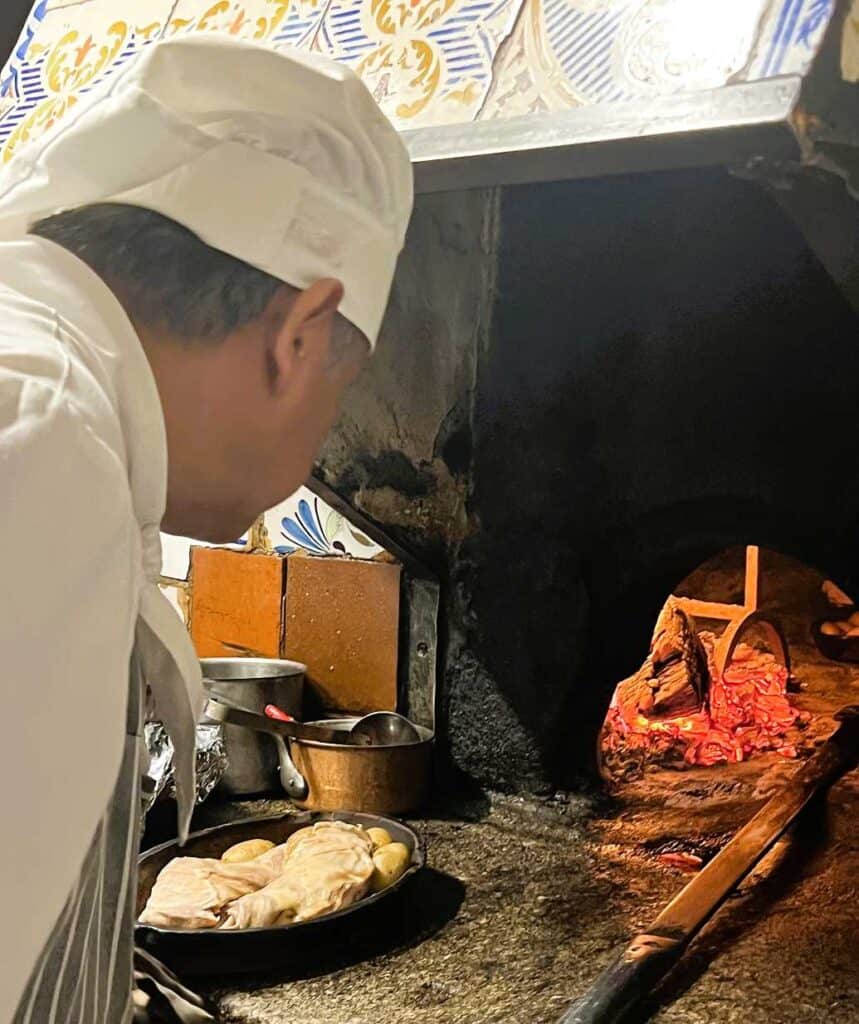
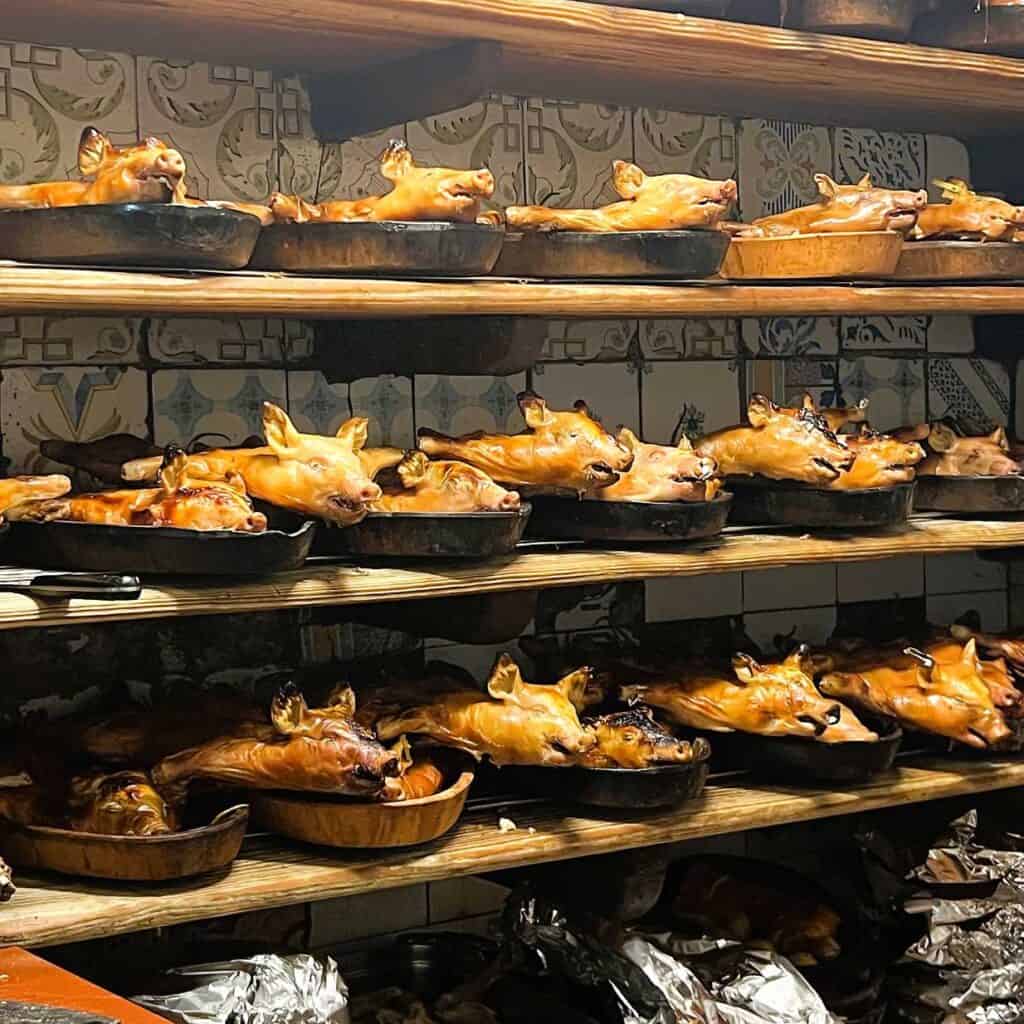
Founded around 1725 by a Frenchman, Jean Botin, the inn became Casa Botín. Later, it passed to his nephew Candido Remis, who renamed it Sobrino de Botín, literally “Botín’s nephew.” Over time, it evolved into a full restaurant but retained its intimate rooms with low ceilings. Also, it kept that critical piece of infrastructure: a brick, wood‑fired oven that locals say has “never gone cold.” I was told that if it were to go cold, it would crack.
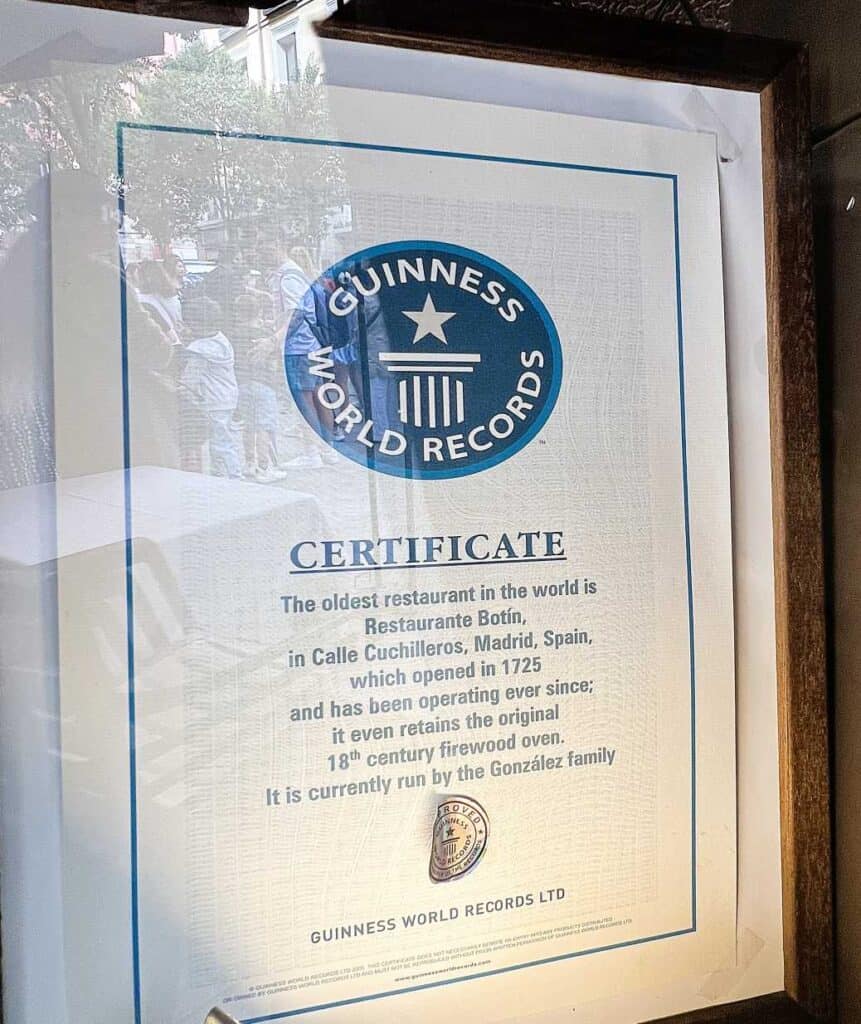
The Guinness World Records title gets most of the attention, and for good reason. Botín is recognized as the oldest restaurant in continuous operation. But what makes it more interesting to me is the neighborhood around it.
This is not a museum dressed up as a restaurant. It is a place that has kept doing the same basic job for nearly 300 years: taking meat, fire, and time, and turning them into a meal people came in hungry to eat.
Stepping Into Hemingway’s Madrid
When Hemingway arrived in Madrid, he found a city that matched his obsessions: bullfighting, strong drink, late nights, and the harsh clarity of war. He drank beer in Plaza de Santa Ana, discovered sherry at La Venencia, checked into grand hotels like the Palace, and, crucial for us, ate at Botín. In The Sun Also Rises, he folded this very real restaurant into his fictional world.
Towards the end of the novel, Jake and Brett share a simple meal of roast suckling pig and wine at Botín. Then, take one last taxi ride through Madrid. Hemingway avoids describing the scene in too much detail. He simply places them upstairs, setting the table with pig and Rioja. Their conversation carries the moment. This restraint is what makes the scene memorable and why readers may be inspired to visit the same dining room. You’ll likely look around to see if anything matches your imagination.
Today, the walk from Plaza Mayor remains almost the same as before. You pass beneath the Arch of the Knife Makers, then descend the steep steps. You’ll reach a street lined with weathered façades and historic taverns. Botín’s sign is exactly where you’d expect, with a small, easily overlooked doorway. Inside, the atmosphere is lively. The hosts manage reservations and conversations overlapping in Spanish, English, and other languages.
If you’ve read the book, it’s hard not to overlay the story onto your current experience. You can imagine the upstairs table waiting somewhere ahead and recalling a meal that was once purely fictional but now influences what many anticipate when they sit down to eat.
Upstairs at Botín: Atmosphere on a Knife‑Makers’ Street
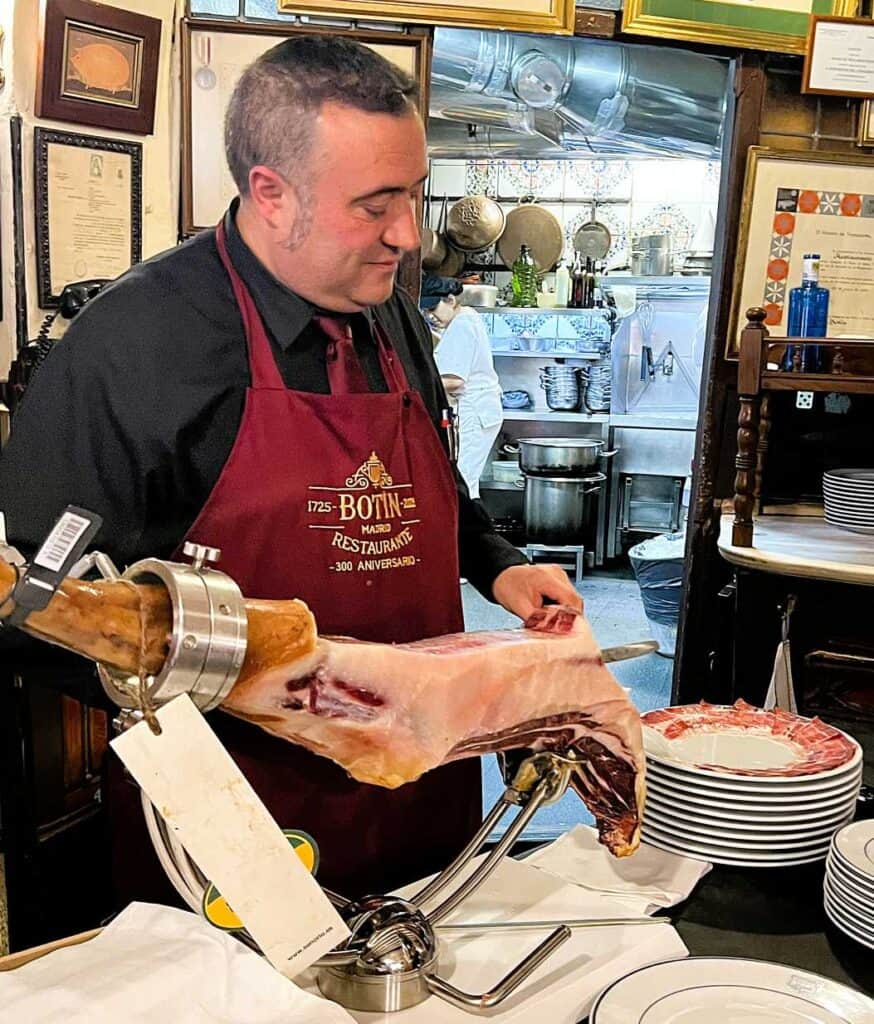
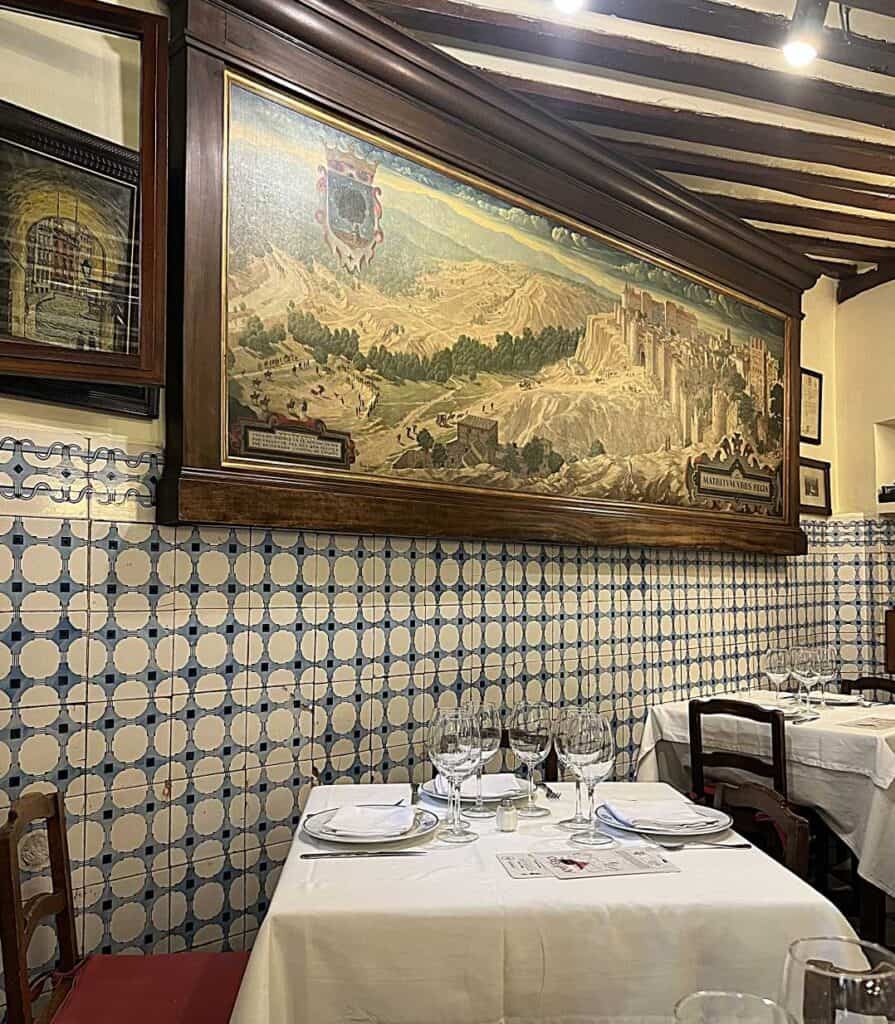
There is a ritual to eating at Botín. Your name is checked at the door. Then you’re directed toward the staircase, steep, polished, and just a little uneven from generations of shoes. On the way up, you might glimpse the oven. Its door swung open to reveal a burst of orange flames and a stack of pans loaded with meat. A cook reaches in with a long handle and redirects a piece of pork. In that quick flash, you glimpse what three centuries of repetition look like.
The upstairs dining rooms, featuring low ceilings, exposed beams, and tightly arranged tables, create an atmosphere that feels both cozy and slightly secluded. Soft light filters in through small windows, and conversations tend to stay quietly hushed. You can hear snippets from the neighboring table, yet it remains easy to retreat into your own quiet space.
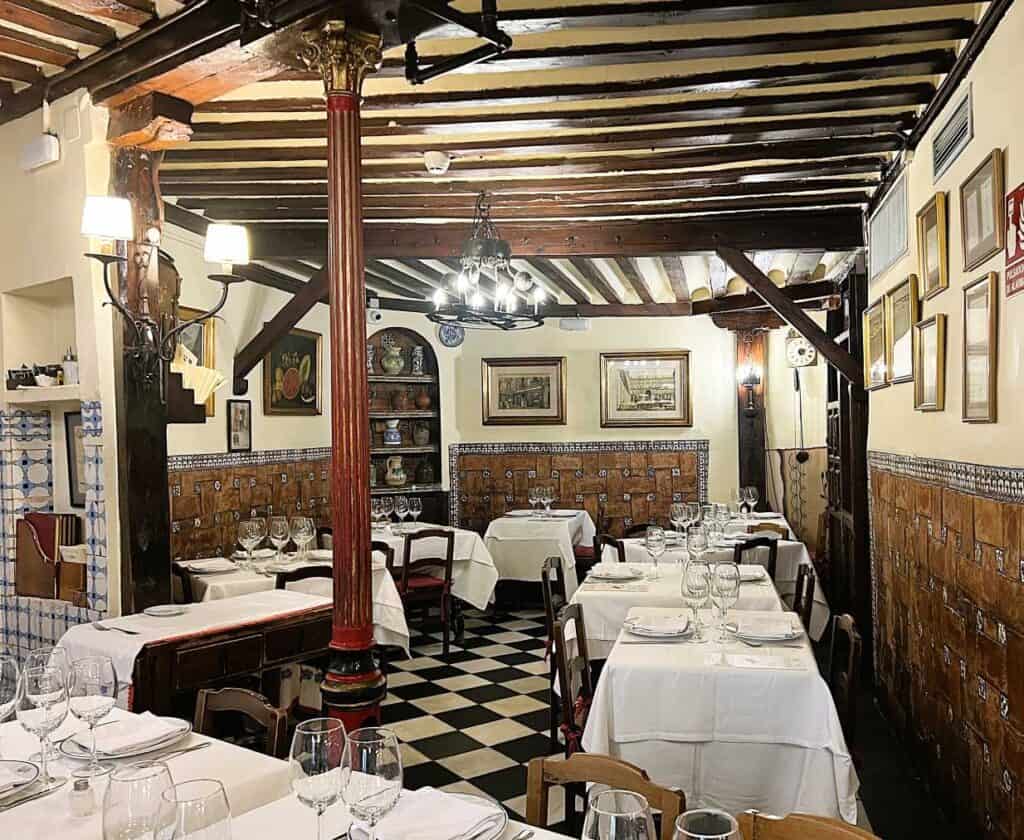
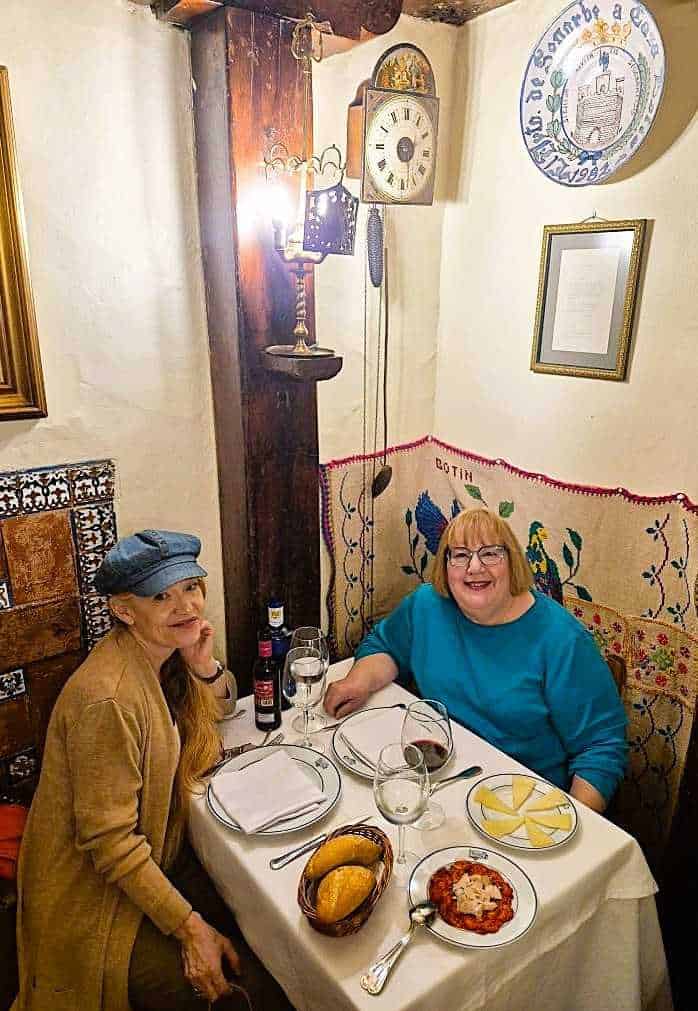
This is where the upstairs detail from The Sun Also Rises clicks into place. An upper‑floor room separates you just enough from the roar of the kitchen and the bustle of the street. You can imagine Jake and Brett at one of these tables, the plaza temporarily forgotten, the world narrowed to plates, glasses, and the uncomfortable truth neither quite wants to say aloud.
Of course, modern life intrudes. Phones emerge, photos snapped, and you may catch someone filming a reel. But there are also pauses. The silence between courses when the room feels oddly timeless, and you’re just another traveler pausing on a knife‑makers’ street to enjoy a meal.
Cochinillo, Rioja, and What to Order
Then there’s the pig.
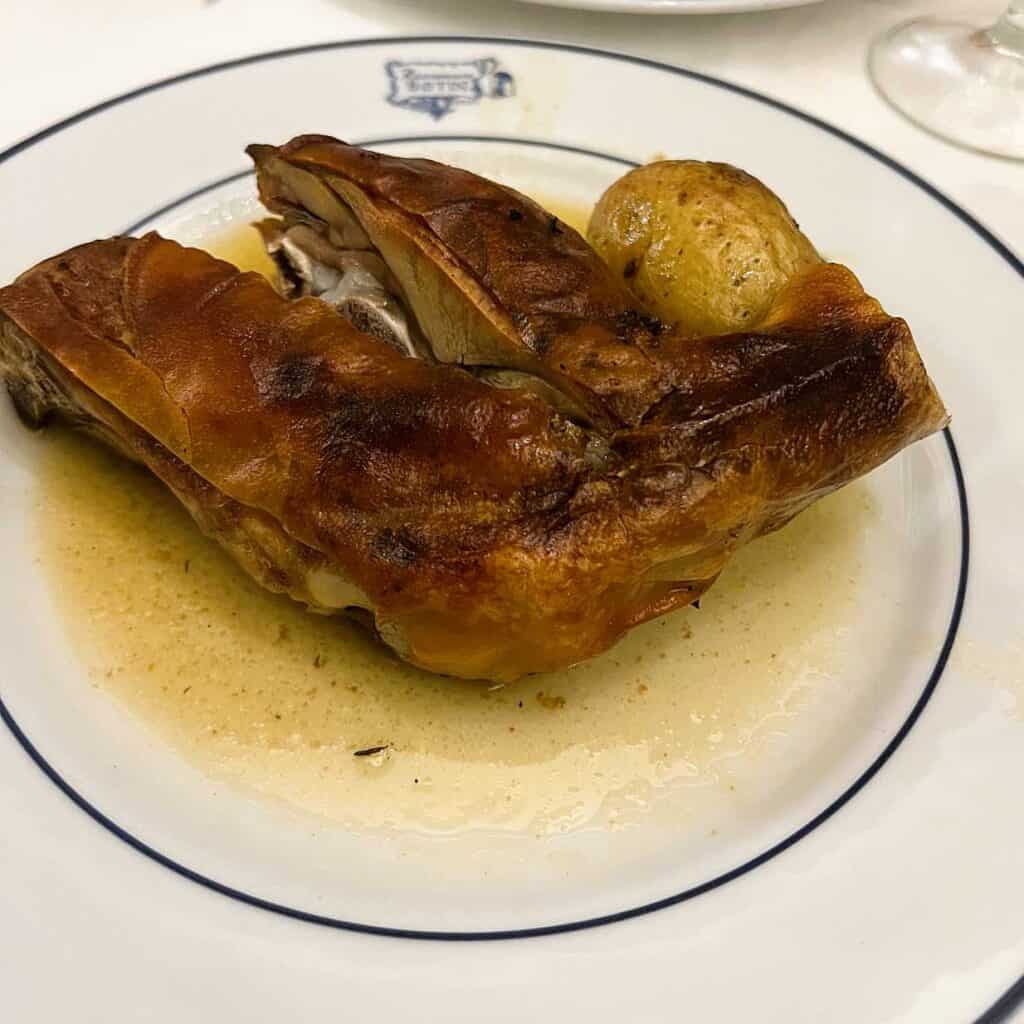
Cochinillo asado, roast suckling pig, is the dish that defines Botín. When the platter arrives, it’s deceptively modest: a portion of pig glazed in golden‑brown skin, a shallow pool of juices, maybe a few potatoes nudging the margins. This isn’t food designed for Instagram; it’s food designed for appetite.
The skin crackles under your fork, giving way to a crisp snap. The meat is shockingly tender and rich. It has just enough fat to feel luxurious without being heavy. Generations of cooks and that perpetually hot oven have learned just how far they can push the roast.
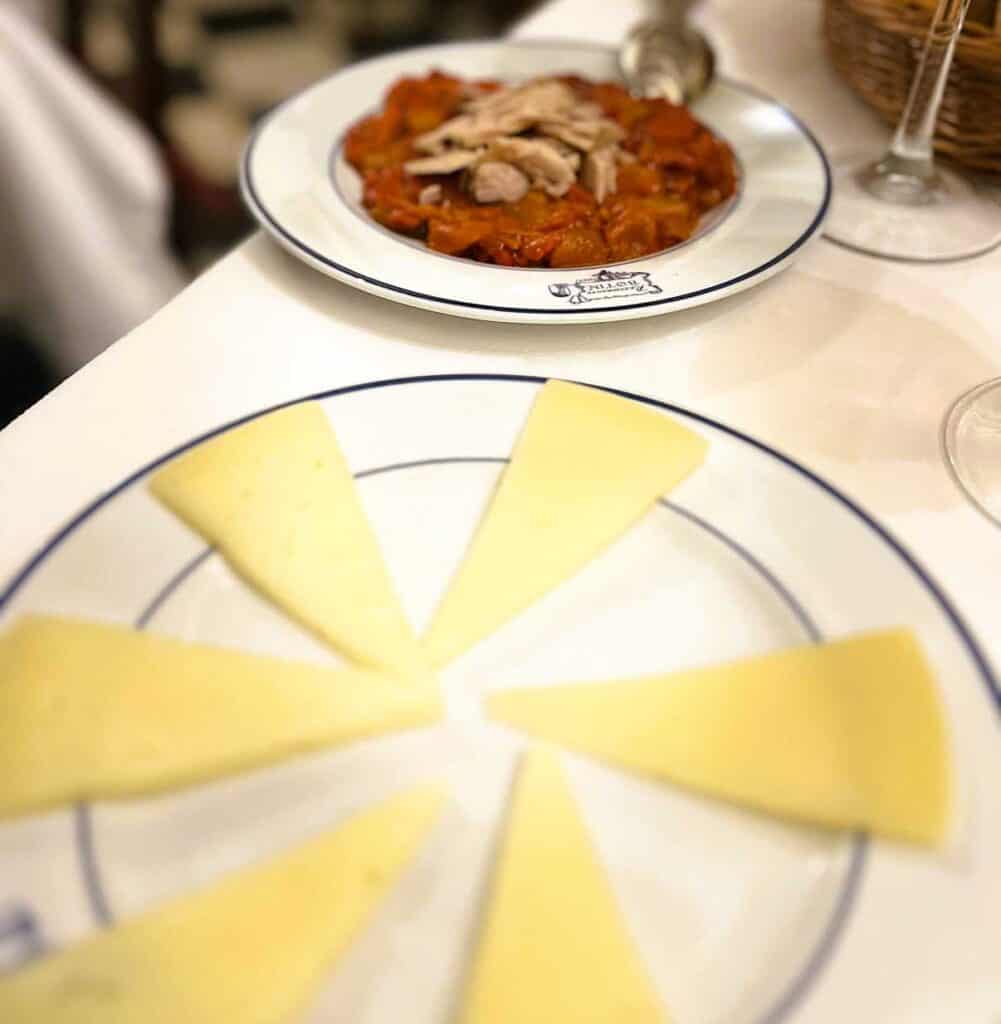
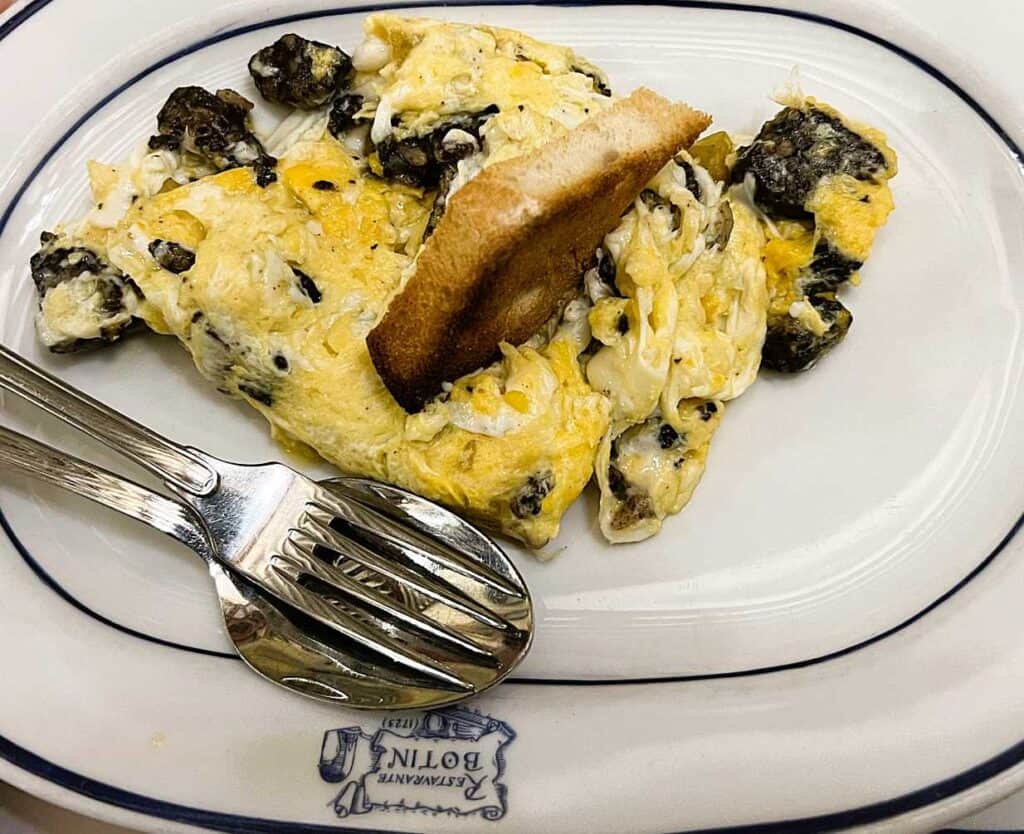
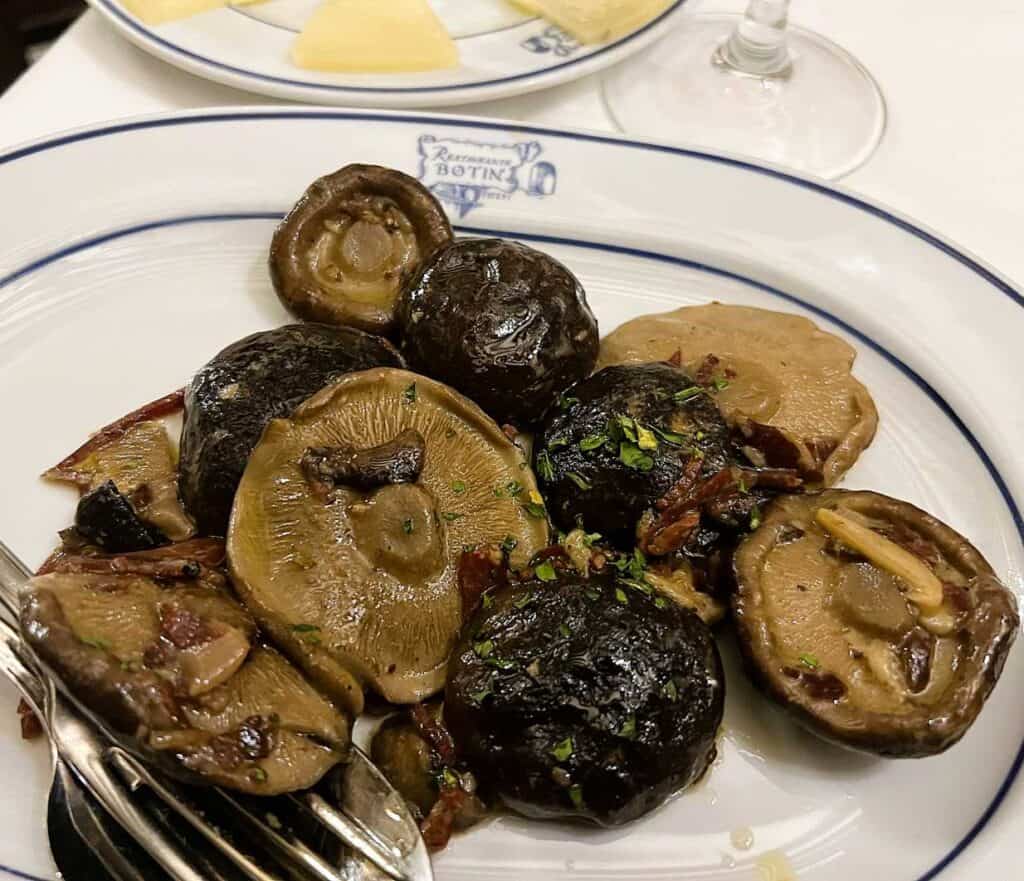
Botín’s Menu
Botín’s menu offers other classic Castilian dishes, roast lamb, simple soups, and straightforward starters. But for a first‑time visitor, especially one tracing Hemingway’s footsteps, cochinillo is non‑negotiable. It’s the bridge between the knife makers and the novel. It’s the logical endpoint for meat that once moved from guild stalls to ovens on this very street, and the specific dish Hemingway chose to immortalize at that upstairs table.
To drink, a bottle of Rioja closes the circle. A well-chosen Rioja tinto brings bright red fruit, a little oak, and enough structure to stand comfortably alongside the richness of the pork. Modern wine lists at Botín are broader than in Hemingway’s day, but a classic Rioja nods to the novel without turning the meal into cosplay.
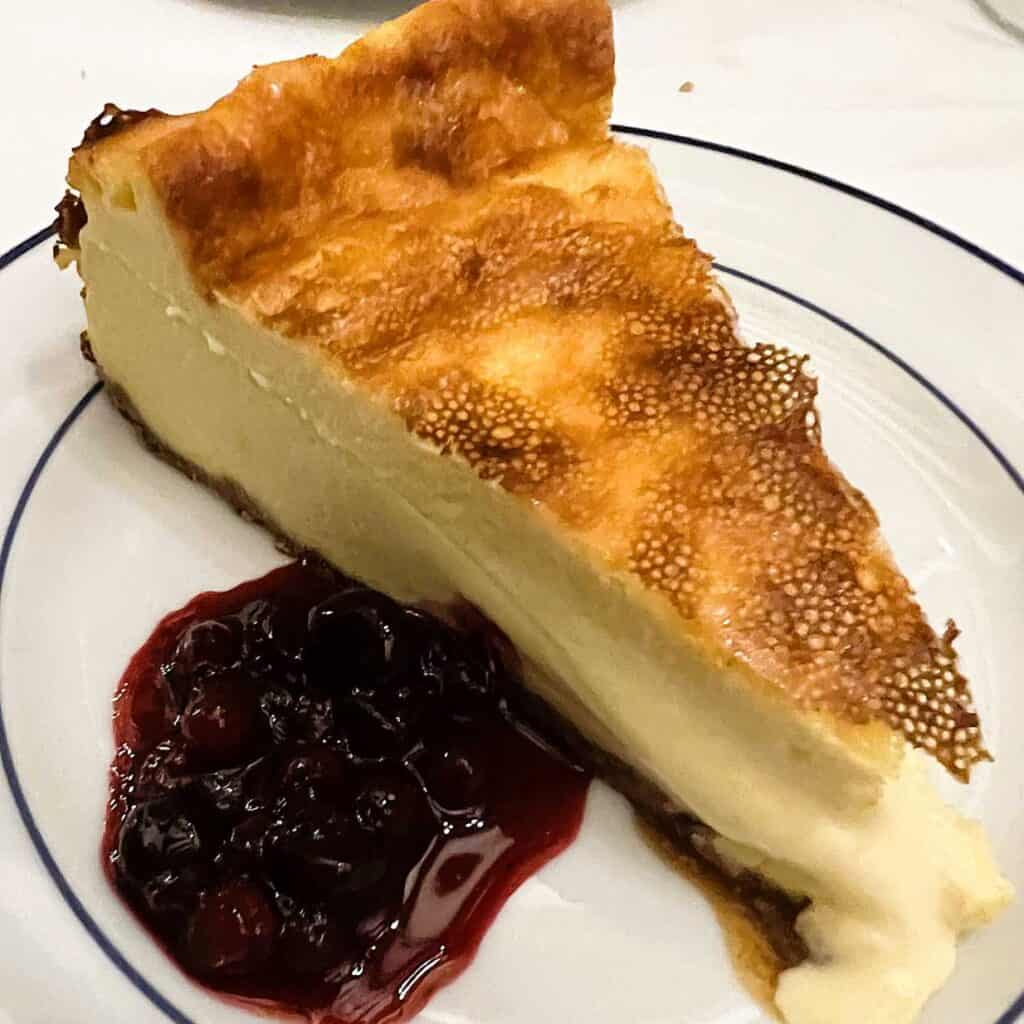
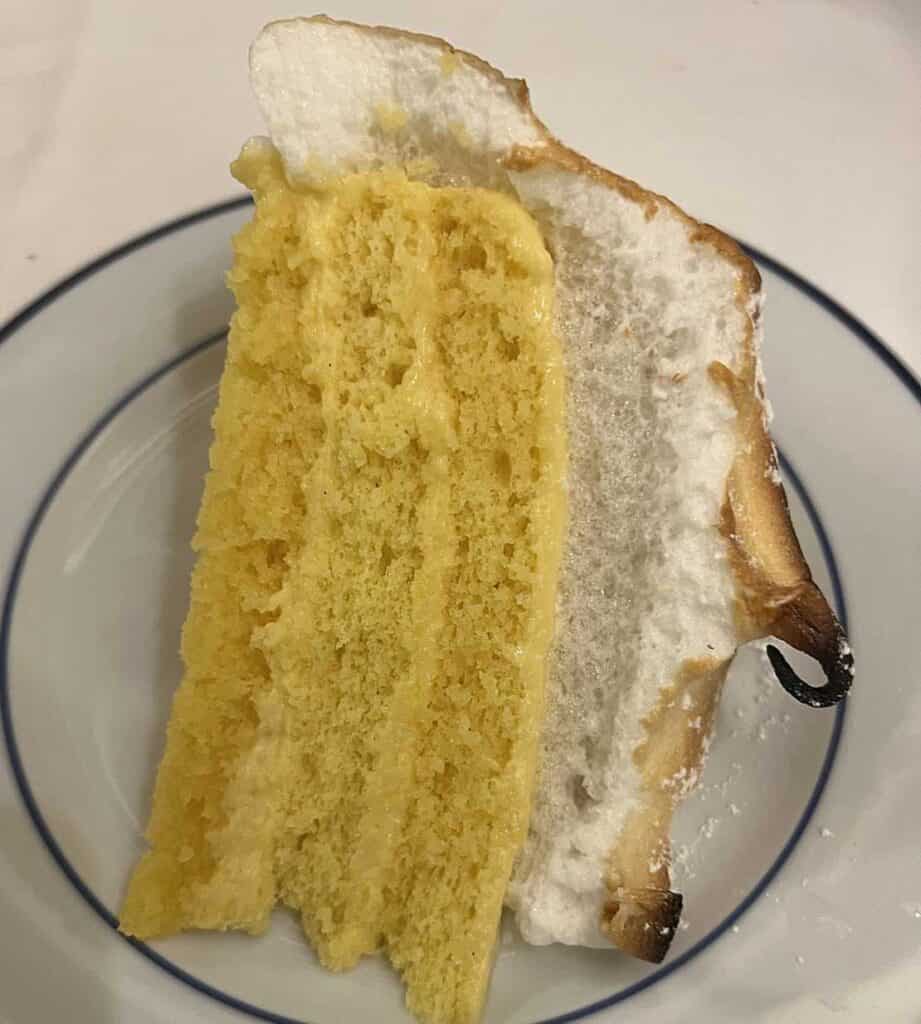
If pork isn’t your thing, roast lamb is a worthy understudy, equally rooted in Castilian tradition and equally at home in that oak‑fed oven. Portions are generous; sharing plates and sides can keep both appetite and budget in check. Dessert, if you make it that far, tends to stay pleasantly old‑fashioned: flan, a house cake, maybe a scoop of ice cream.
My advice? If you’re only going once, order the cochinillo and a bottle of Rioja, and let the rest of the menu wait for another chapter of your life.
Between Pilgrimage and Tourist Trap
Any restaurant that has survived three centuries, earned a Guinness World Record, and been canonized by Hemingway inevitably becomes a pilgrimage site. People fly to Madrid with Botín circled in red on their itineraries. Some arrive clutching a dog‑eared copy of The Sun Also Rises, others a list of “world’s oldest” restaurants to tick off. There’s no pretending this is a hidden gem.
That fame comes with its costs. The dining rooms are rarely silent. Making reservations is essential. Both TripAdvisor and Yelp are full of photos of cochinillo and the oven door. On busy nights, the service can feel like a rehearsed performance, with waitstaff skillfully moving among crowded tables, balancing stacks of plates, and explaining the day’s options in multiple languages.
However, Botín avoids becoming a typical tourist trap. Its menu stays true to traditional Castilian cuisine rather than following fleeting trends. The oven isn’t just a photo prop; it’s the original brick oven, still roasting meat since 1725. Locals continue to visit for birthdays and anniversaries. The staff move with calm confidence, fully aware they are caretakers of a far greater heritage than this week’s reservations.
If you walk in expecting a secret, locals‑only tavern, you’ll be disappointed. If you walk in expecting a polished, high‑volume restaurant with deep roots, honest food, and a literary shadow, you’ll likely walk back up Calle de Cuchilleros very satisfied. The knife makers and meat markets may be gone, but the spirit of a working, feeding city still sits under the tablecloths.
It’s a small world! While Hemingway spent time in Madrid and Key West, he also wrote in Petoskey, Michigan. One of his favorite spots was to write at the bar in the City Park Grill.
Re‑Imagining the Ending of The Sun Also Rises
Eventually, every meal ends. You drain the last of the Rioja, push your plate away, and follow the path back down the stairs past the oven, now glowing a calmer orange after the rush. The door opens, the street folds around you, and suddenly you’re back in the cool air of Calle de Cuchilleros.
Readers of The Sun Also Rises can’t help thinking of the novel’s final taxi ride, when Jake and Brett share a conversation about the life they might have had together in a different world. Hemingway doesn’t give them a neat resolution, and he doesn’t give us one either. He lets them sit with their “what ifs” in the middle of Madrid traffic, and then he gently closes the book.
Leaving Botín, your mind may start asking new questions. What if you’d found this street earlier? What if you’d never heard of Hemingway and just wandered from the square? What if your ideal ending isn’t a clear moral but a contented sigh on an old stone stair?
Botín serves as a reminder that not all endings are definitive. Some are simply pauses—a chance to rest and reflect before moving on to the next chapter.
Piper’s Pro Planning: Your Own Botín Experience
If you plan to add Botín to your Madrid itinerary, a few practical details will help you savor the experience.
- Reservations: Book ahead, especially for weekend lunches and dinners. Online reservations are straightforward. If you have your heart set on an upstairs room, mention it in the notes or by email. They can’t promise, but requests are taken seriously.
- Tours: To book a tour of Botín with lunch or dinner, reserve here.
- When to go: A late Spanish lunch, around 2 to 3 p.m., feels closest to the novel’s long, languid meal. While an evening visit lets you emerge into a beautifully lit Plaza Mayor. Choose whichever fits the rest of your itinerary.
- Budget: This is a splurge rather than a value meal. Cochinillo, wine, and dessert add up, but you’re paying for centuries of history, a uniquely atmospheric setting, and a dish that genuinely lives up to its reputation.
- What to order: For a first visit, focus on roast suckling pig or lamb and a bottle of Rioja. Perhaps share a starter and dessert. Keep the menu simple and let the oven do what it does best.
- Non‑drinkers and families: You don’t need alcohol to enjoy Botín. Order water, soft drinks, or non‑alcoholic options and soak up the atmosphere. Early evening seatings work well with kids, who may be just as fascinated by the oven and the steep steps as by the food.
What to Read Before Botín
You don’t have to do homework before you go. The oven will still be hot. The pig will still be crisp. And the neighborhood will still slope dramatically down from Plaza Mayor, whether you arrive well‑read or not. But if you enjoy layering stories over your travels, a little pre‑trip reading will make that upstairs table even more meaningful.
- The Sun Also Rises by Ernest Hemingway
Take time to read the entire novel. Follow Jake and Brett from Paris to Pamplona. Then, finally, to Madrid. When they reach Botín near the end, you’ll have earned your own roast pig. If you’re short on time, skim the last few chapters to understand the emotional weight of that lunch and the final taxi ride.
- A short overview of Madrid’s history
Look for a quick, accessible article or chapter that covers the evolution of Plaza Mayor and its surrounding streets. Understanding the square’s role as a market and a stage, and Calle de Cuchilleros’ role as a working corridor of knife makers and meat sellers. It adds texture to what you see on the way down to Botín.
- A piece on Hemingway’s Madrid
Many travel writers and historians have followed his path across the city. Read a brief essay about his preferred bars, hotels, and bullfighting stories. It will show him not just as a famous author, but as a complex, human traveler navigating these streets.
If you prefer podcasts to pages, look for an episode on Hemingway’s Spain or Madrid’s historic eateries. Cue it up on the plane. By the time you reach that steep little street under Plaza Mayor, you’ll feel as if you’ve stepped into a story, you already know. But this time, you get to choose how it ends.
While Piper is a lifelong Michigander, she’s had adventures worldwide. Bomb-sniffing dogs chased her in the middle of the night in Bogota (working late), gate agents refused her boarding to Paraguay (wrong visa), and US Marshals announced her seat number on a plane while looking for a murder suspect (she’d traded seats). It’s always an adventure! She even finds exciting activities in her home state of Michigan, where she lives in Lansing with her husband, Ross Dingman, her daughter, Alexis, and two granddaughters.





0 Comments